Welcome back to The Varsity, a private email that goes inside the boardrooms and owner’s suites whose
occupants dictate the sports media business. I’m John Ourand, still in Washington, D.C., but packing for a trip to wine country. This weekend, I’m co-hosting a private dinner in Sonoma with NASCAR commissioner Steve Phelps ahead of their big race on Sunday. We’re overflowing with executives from the industry, but let me know if you’ll be out there, and I’ll see whether I can squeeze you in. Marchand will be keeping the crisp sancerre on
ice.
At today’s Big 12 media day group grope, commissioner Brett Yormark offered up the latest sign of the fracturing of the college sports landscape. While discussing the implications of expanding the College Football Playoff to 16 teams, Yormark pushed the notion that 11 of those bids should be at large. Of course, that directly contradicted recent statements by Big Ten commissioner Tony Petitti, who pressed for both his conference and the SEC to
receive four automatic bids each. The eventual settlement of this dispute will further define the modern power structure of this sprawling Wild West.
Elsewhere, DAZN has had its share of publicized problems trying to penetrate the U.S. market. Still, the much-beleaguered streaming service is undeniably having a moment this summer with the FIFA Club World Cup. Julia Alexander looks into whether that will be enough to change DAZN’s trajectory. As a reminder, Julia’s stories
are available only to Inner Circle members, so click here to upgrade. You won’t regret it.
Now, here’s Julia…
|
Stat of the Week: 75
Percent
|
That’s the share of new F1 fans (i.e., those who’ve followed the sport for less than five years) in
the United States who are women, according to a recent survey conducted by the racing org. The league also claims that women make up about 25 percent of its total fan base, up from 10 percent in 2017. No, this is not all thanks to Brad Pitt, but it’s worth noting that F1 scored the second-largest opening of his multidecade career.
Some people credit
Netflix’s Drive to Survive as the catalyst for F1’s ascent, but the vast majority of new fans in the survey said they came to the sport through friends, family, and social media—in other words, good old-fashioned word of mouth. And that tracks with other supplementary findings in F1’s very focused, intentionally designed study: More than 50 percent of Gen Z fans surveyed were women, and 70 percent of Gen Z fans were interacting with F1 in some capacity on a daily basis.
Sure, the
release of this survey is a brazen attempt by Liberty Media to get someone to bid on U.S. rights to F1. But this might be just the data that Apple’s Eddy Cue needs to pull the trigger. After all, Apple’s F1 movie is set to surpass $300 million globally, making it Apple’s most successful movie, too…
|
|
|
A MESSAGE FROM OUR SPONSOR
|
PERFORMANCE UNLEASHED
Agile, powerful, iconic. The Range Rover Sport is a dynamic SUV with a distinct take on
sporting luxury.
EXPLORE
|
|
|
- Wimbledon’s A.I. woes: Since the eerie beginnings of our A.I. revolution, I’ve wondered how these new technologies would affect not only the various leagues and media companies that are busy integrating them into every aspect of their business, but also the players and the state of play. For Wimbledon, at least, the answer seems to be: negatively.
This year, Wimbledon replaced human line judges with an electronic system called E.L.C. British players Emma
Raducanu and Jack Draper each complained that the technology was inaccurate, and blamed it for a loss of points. Of course, this is a preview of what’s in store for baseball players now that MLB is experimenting with robo umps—a term the league will never love—and automated strike zone systems. But is the tech that much worse at making calls than a human ref or umpire, who are also known to get things wrong on occasion? If you talk to Josh Allen
and the Buffalo Bills about the call that cost them the AFC championship game against the Chiefs, I bet they’ll tell you they’d have preferred a robot.
Naturally, the system still has some issues to iron out. But there’s no question that A.I. will become a fixture in some capacity in sports. And, as my newest Puck partner, Ian Krietzberg, notes, it’s worth remembering that these models are trained on humans. In other words, they won’t be infallible
either—so you’ll still be able to blame the ref, whether it’s a person or a bot.
- The least consequential, most sought-after game in baseball: I was recently flabbergasted to learn that a showdown between the Chicago White Sox and the Colorado Rockies, two of the worst teams in baseball, nearly sold out Coors Field last week. I was even more shocked to learn that the Rockies, who are historically bad this season, continue to pull
in some of the biggest crowds, per my pal Jacob Feldman over at Sportico.
Indeed, even minimal efforts to make attendance affordable and accessible can turn casual fans into diehards. Instead of dwelling on the Rockies’ shortcomings (starting pitching, a bullpen, slugging, defense), let’s appreciate
their strengths: an all-time great ballpark, conveniently located in the heart of the city, in one of the sunniest states in the country, with $3 beers—Coors, of course. The stadium also permits outside food in the ballpark. The Rockies may not be good at baseball, but the organization understands the experiential business.
In many ways, baseball is having a moment: Viewership is up by double digits on every major network year over year; streaming viewership is up nearly 30
percent in the same time frame; and attendance was up in the 2024 season, marking the first time in 12 years that MLB attendance grew in back-to-back seasons. And yet, the sport’s business model is in shambles. The regional sports network business is in its death throes, and the league can’t find a partner willing to pay anywhere near the $550 million that ESPN used to shell out for its signature rights package. There appears to be a general consensus that the long season leads to tons of
inconsequential games, which diminish ratings and come at a costly premium if the R.O.I. isn’t there. But this could be the perfect opportunity to change things. After all, the economics are at odds with what the fans are telling the market. Hopefully, Rob Manfred’s team will find a creative way to harness the enthusiasm.
- Dana White goes to the White House: Donald Trump fancies himself more of an emperor than a
statesman, so maybe it’s not a surprise that he’s planning to host a UFC fight on the White House lawn next year. Trump plans to stage a July Fourth event to celebrate the country’s 250th birthday, and the leading lights of the manosphere are emerging to show their interest. Conor McGregor tweeted that he wants in, because having an Irishman fight an American would at least approximate the historical events that brought us here, I guess?
Crass commercialization of
historic U.S. landmarks aside, this sort of stunt might draw tech magnates like Mark Zuckerberg and Jeff Bezos, who still need to seek Trump’s favor as they look for regulatory relief while pumping billions into their A.I. businesses. Who knows, maybe Zuck can finally lure Elon Musk into the ring? More seriously, expect some jockeying for the rights to broadcast this spectacle. UFC is currently marketing its media rights, and this eventized
eye-roller might sweeten the package.
|
|
|
With its quixotic, billion-dollar investment in the FIFA Club World Cup and subsequent
acquisition of Serie A rights, the niche streamer is doubling down on soccer to penetrate the U.S. market. Unfortunately, it’s too little, too late.
|
|
|
DAZN, a sports-centric streaming service with 300 million viewers and a reported 20 million paid subscribers,
should be perfectly positioned for success. Live sports have become essential for streaming, and vice versa, and the company is backed by billionaire Len Blavatnik (who recently shoveled another $827 million into the enterprise) and a pool of Saudi money. But while DAZN has a somewhat notable presence in Europe and Asia, it has a brand issue here in the States—few know what the streamer offers, and even fewer know how to pronounce its name (it’s “da zone”).
A few
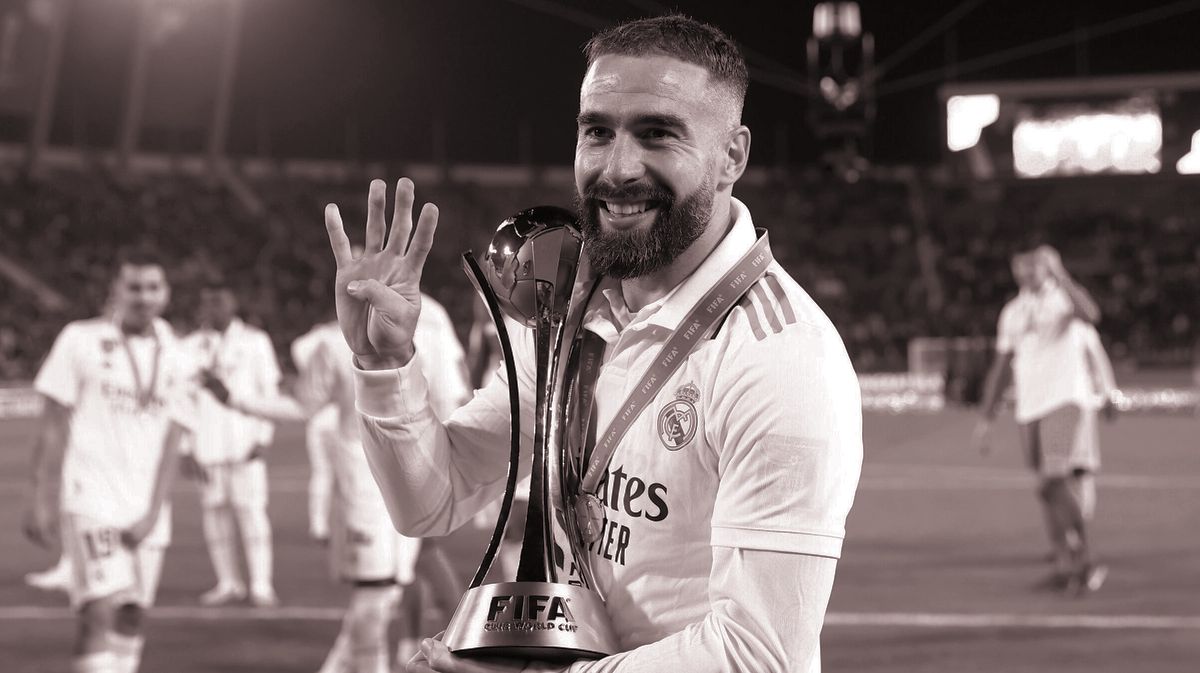
years ago, DAZN C.E.O. Shay Segev made a meaningful bet on fixing that: He paid $1 billion for rights to air FIFA’s new Club World Cup tournament, which has been playing out this year in U.S. stadiums from MetLife to the Rose Bowl. To extend the tournament’s reach, DAZN also sublicensed a number of games to TNT, which is still available in around 60 million homes. Early returns for both companies are promising. Since the tournament started in January, DAZN has sat atop Apple and
Google’s app store rankings for free and paid sports apps, per analytics firm Data.AI. It’s currently in the App Store’s top 20 free apps overall.
Ratings for the FIFA Club World Cup have been impressive, too. TNT Sports averaged 360,000 viewers per game through last week, and that number ticked up to 400,000 for weekend matches—more or less on par with average Premier League viewership in the U.S. Unsurprisingly, TNT’s largest audience came for the game between Inter Miami and
Palmeiras, pitting Lionel Messi against the Brazilian side’s rising star, Estêvão Willian (a key part of Chelsea’s future), which peaked with 875,000 viewers.
|
|
|
A MESSAGE FROM OUR SPONSOR
|
PERFORMANCE UNLEASHED
Agile, powerful, iconic. The Range Rover Sport is a dynamic SUV with a distinct take on
sporting luxury.
EXPLORE
|
|
|
If ever there were ever a make-or-break moment for soccer in the U.S., it’s this current lead-up to the 2026
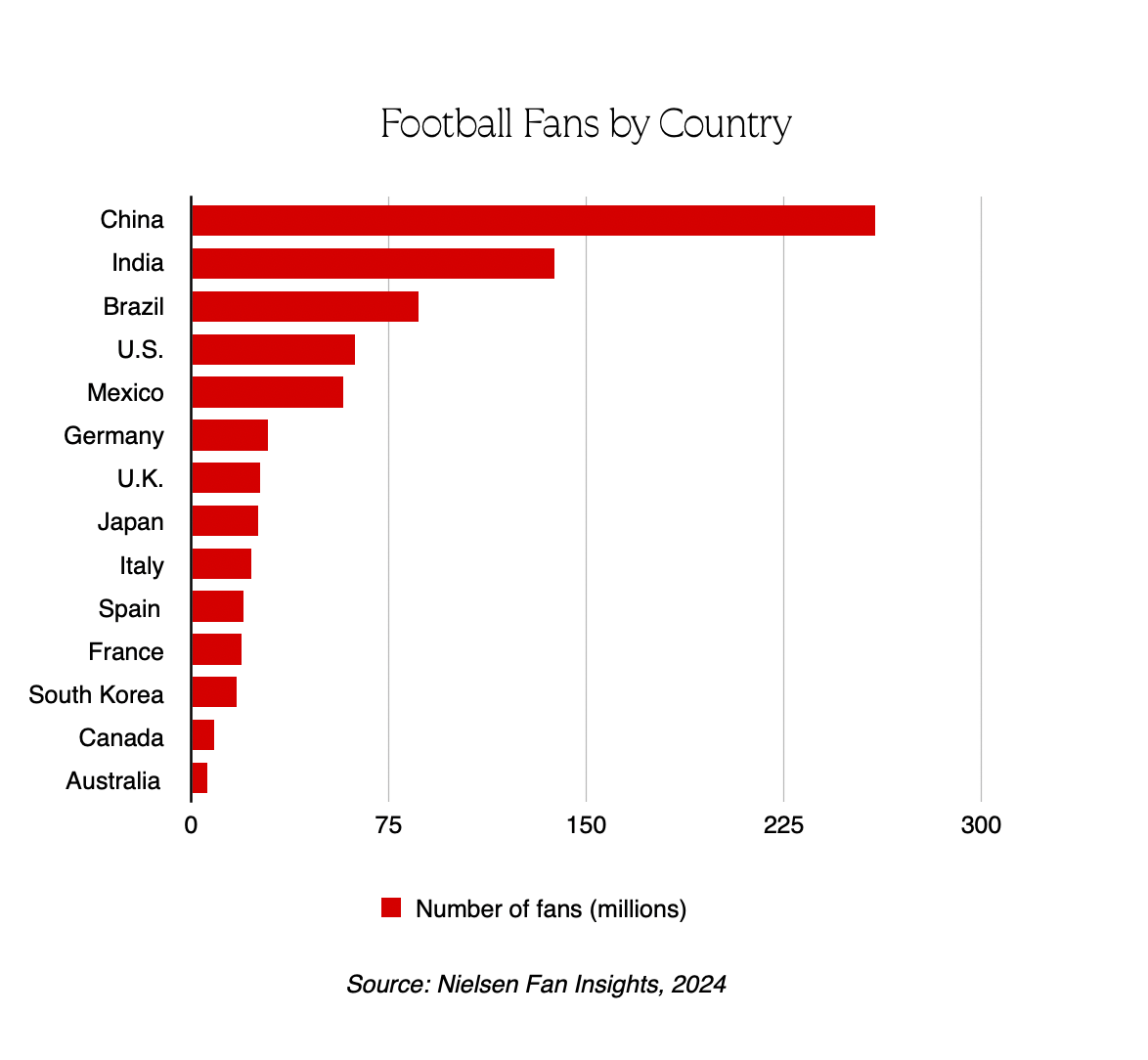
World Cup, which will be played across North America—in the U.S., Canada, and Mexico. Every four years, the World Cup becomes the most watched sporting event in the world. The tournament drew 5 billion viewers in 2022—nearly 60 percent of the world’s population. Even Copa America doubled its audience between 2021 and 2024, according to Nielsen. And despite having a lower percentage share of fans compared to countries like Mexico, the U.S. boasts the fourth-largest soccer fan
base globally, with 62 million fans, per Nielsen.
|
DAZN, which has already snatched up certain Serie A rights in the U.S. beginning in 2027, is
capitalizing on the trend to penetrate the U.S. market. Unfortunately, though, it might not be the right streamer to take advantage of the sport’s ascent. Unlike the passive channel-surfing of the linear era, streaming is all about owning intentional audiences. And in the case of soccer, that means one thing: You need the English Premier League.
Alas, DAZN simply waited too long. While we’ve seen 60 percent growth in viewership of international soccer since 2018, from 31.4 million
Americans to over 50 million, rights to the most popular soccer leagues in the U.S.—the Premier League, Spain’s La Liga, Mexico’s Liga MX—already belong to media companies whose executives decided to go all-in on soccer more than a decade ago.
|
For streamers, the two main strategies for rolling up live sports rights are to a) own big events, or b)
double down on regular season programming. Netflix relies on big events to bring commercial brands into the business. Amazon, which already operates the largest advertising tier of all major streamers and reaches more than 130 million active users in the U.S., focuses on regular season inventory. Just last week, a new report
from Performance Research found that nine in 10 sports fans are streaming, with 65 percent of survey respondents saying they use Prime Video weekly, compared to ESPN+ at 39 percent, Peacock at 37 percent, and Paramount+ at 32 percent.
But there are unique complications with international soccer—foremost among them: time zones, which can make live viewing exceptionally difficult on the West Coast. Also, while DAZN is acquiring rights to soccer games in the United States, those rights are
not always exclusive. In the U.S., DAZN’s Serie A rights will cover 10 matches, including five exclusive Championship titles—but only in Spanish. (Paramount+ holds rights to the English-language broadcasts.) Individual leagues matter a ton, too. Alas, for DAZN, there just aren’t that many soccer leagues that American audiences are interested in, and rights to the leagues that do matter are already spoken for. Fox, NBC, and CBS account for almost all of the international soccer
coverage in the United States. For a streaming audience, Peacock, Paramount+, and soon-to-launch Fox One will be the go-to homes for soccer coverage. It isn’t hard to imagine Paramount+ and Peacock one day joining forces with Fox One in some capacity to create the ultimate soccer bundle.
According to a joint 2024
study by Samford University and SBR Fan Media, more than 70 percent of the total U.S. audience for international soccer is purely interested in the Premier League. Even France’s Ligue One, which is home to Paris Saint-Germain and the otherworldly Ousmane Dembélé,
maintains only about 9 percent of total audience share in the U.S. Not even superstars convert regular season viewers. While FIFA’s Club World Cup proved audiences will download a free app to watch a major event, that audience won’t necessarily stick around for random games in leagues with a fraction of the fan base.
|
Thanks, Julia! See you all on Thursday.
John
|
|
|
Puck sports correspondent John Ourand and a rotating cast of industry insiders take you inside the executive suites and owners boxes where
the decisions that shape the entire sports business are made. You’ll hear interviews with players, network execs, and everyone in between. The Varsity is an extension of John’s private email for Puck by the same name. New episodes publish every Wednesday and Sunday.
|
|
|
The industry's go-to source for unflinching reporting on the trillion-dollar business of artificial intelligence - perhaps the single most
important technology of our time. Ian Krietzberg, the powerhouse journalist behind The Deep View, delivers twice-weekly insights into the latest dealmaking and breakthroughs in A.I., and how the intersecting worlds of finance, entertainment, media, and politics are being transformed in its wake.
|
|
|
Need help? Review our FAQ page or contact us for assistance. For brand partnerships, email ads@puck.news.
You received this email because you signed up to receive emails from Puck, or as part of your Puck account associated with . To stop receiving this newsletter and/or manage all your email preferences, click here.
|
Puck is published by Heat Media LLC. 107 Greenwich St, New York, NY 10006
|
|
|
|