Hi, and welcome back to Line Sheet. R.I.P. David Hockney. A lot of important
artists died this week, reminding us all of the inevitable. I am glad I got to see Hockney’s recent show at the Serpentine Gallery in London, which you should visit this summer if you can. The only thing that really clears the cobwebs in my brain these days, other than Ann
Patchett, is looking at art.
Anyway, Malique “Malique@puck.news” Morris is back with the week that was in fashion, from J.Crew’s Simplicity City–style marketing campaign to the latest department store drama. Up top, the latest on Butt magazine’s battle with Meta, and I check in on Charvet, post-Chanel collab and Throwing Fits drag. Malique
also has news out of Under Armour, which is struggling big-time to maintain its relevance with the macro-counting crowd. Plus, we’ve got feedback from you on various subjects covered in this extremely private email.
Line Sheet in the news: I appeared on Vox’s Today, Explained yesterday with Noel King to discuss the death of Millennial brands like Everlane. Listen
here.
Also mentioned in this issue: Kevin Plank, Steph Curry, John Varvatos, Eva Chen, Net-a-Porter, Gilles Bensimon, Loro Piana, Emilia Petrarca, Brett Blundy, Boring Not Com, Libby Wadle,
Olympia Gayot, Skechers, Julia Collier, Benito Skinner, Molly Gordon, Jasmine Tookes, Quince, Martha Hunt, Taylor Hill, Kate Young, Jamie Mizrahi, Erin Walsh, Thomas Plantenga, and more.
|
Three Things You Should
Know…
|
- Butt
stuff, cont’d: Either here or elsewhere, you probably heard about Butt magazine getting kicked off Instagram not once, not twice, but three times last month, despite maintaining that they hadn’t violated any of Meta’s rules regarding nudity. (I can’t imagine how many people reached out to Eva Chen about this…) In
Thursday’s Styles section, Jacob Bernstein went granular on what happened, and also revealed that Butt, the art org No Limits! Art Castle, and others have filed a lawsuit in the Netherlands claiming Meta is in “breach of multiple provisions of European fundamental rights law, the Digital Services Act (‘DSA’), the General Data Protection Regulation (‘GDPR’) and Dutch civil law.” A rep for Meta did not respond to a request for comment.
Honestly, this is probably
the best thing that could have happened to Butt, which relaunched in 2022 but has been an intermittent fixture on the queer fashion/art scene for more than 20 years. I assume there is new commercial interest given how innocent it all seems.
- The Charvet pseudo backlash: I went to pick up two demi-custom shirts at Charvet today, the fruits of my first-ever special order. The store was overrun with customers, relatively common during a fashion
week, but perhaps not on a random Friday in June. The staff was incredibly busy; they had no time to take lunch. (Everyone in France takes lunch, even me.)
I asked a salesman if it was the Chanel effect, and he deflected, essentially saying it was our collective faults—i.e., all the fashion-conscious folks who have taken it upon themselves to adopt Charvet as their own and make it a part of our personalities. On a recent
episode of the shock-jock fashion podcast Throwing Fits, co-host James Harris went so far as to say that Charvet was overrated. That’s crazy.
What’s great about Charvet mania is that it’s an independently owned, private company, and when this all dies down—and it will—it can go back to serving the people who were here long before any of us,
like the guy who came in while I was checking out and mentioned that he stops by four times a year to order new shirts. Or photographer Gilles Bensimon, who was upstairs on the fabric floor placing an order while I tried on my shirts. He said I made good choices. (In case you’re interested, I did a sherbet-colored twill and a windowpane check in poplin.)
|
|
|
|

|
Malique Morris
|
|
- The over-under on Under
Armour: Under Armour is losing ground in the sportswear race. Last November, Steph Curry and the brand “mutually ended” their 13-year partnership. That same month, John Varvatos, who was (somewhat inexplicably) chief design officer for a spell, left too. Sales fell 4 percent year over year in fiscal 2026, which ended in March, and net losses more than doubled. Against that backdrop, it’s no surprise the company is taking measures to right-size,
including, I’ve learned, the shuttering of its 70,000-square-foot “global innovation hub” that opened in 2017 in Portland.
I’m told that the closure, which will happen this year, is part of a standard restructuring effort following the opening of Under Armour’s new global headquarters in Baltimore in 2024. “Under Armour is making a strategic shift to strengthen key functions in Baltimore and expand our presence in New York by relocating some capabilities from the West Coast,” a
spokesperson told me. “We will continue to invest in our footwear innovation, design, and development operations in Portland, which remain central to our innovation pipeline and future growth.” Some footwear design staffers will move to a smaller office in Portland, still a mecca for sneaker talent, but this represents a major resource shift for the company. As founder Kevin Plank, who returned as C.E.O. in 2024, put it on an earnings call in May, “There are no sacred
cows.”
|
|
|
|
And now, the week in review…
|
|
|
|
While fashion pines for the good old days, the recent experiences of J.Crew, Victoria’s
Secret, and Saks show they’re probably not worth chasing. Plus, notes on the death of wholesale, the rise of live commerce, and more in this week’s edition of the ReSee.
|
|
|
|
As my former colleague Daniel-Yaw Miller observed on Wednesday at writer
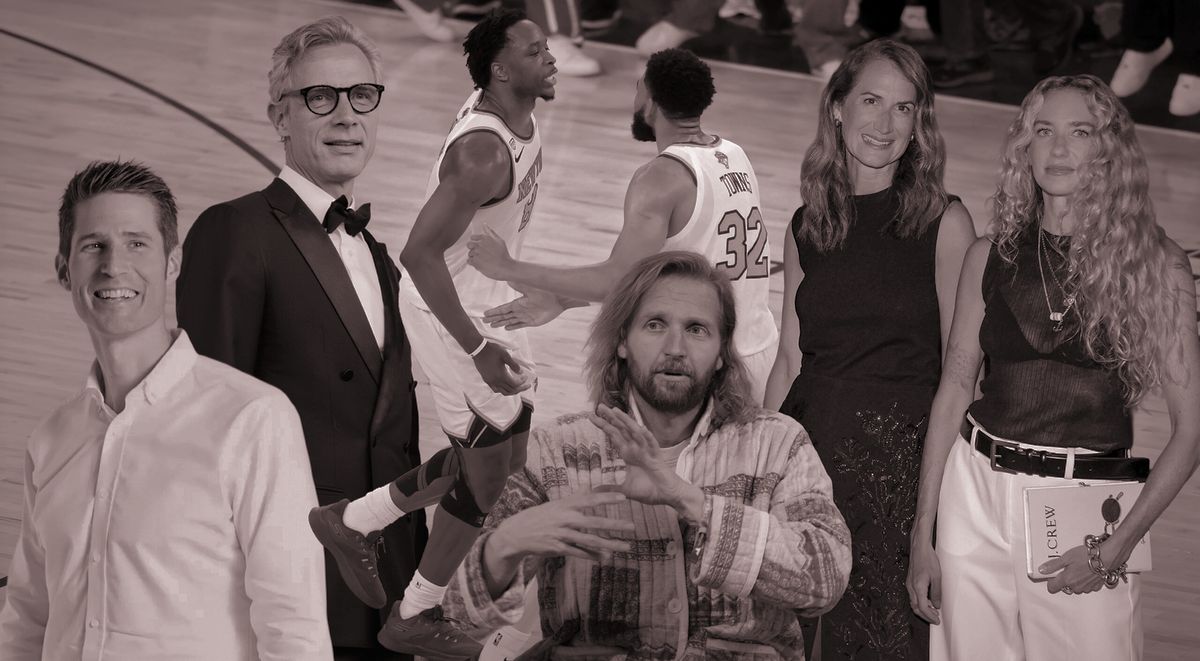
Emilia Petrarca’s Sports x Fashion summit, live sports is truly the last remaining vestige of American monoculture. Hours later, the Knicks pulled off the greatest comeback in NBA Finals history. (Taciturn star OG Anunoby tipped in the game-winner wearing cobalt blue… Skechers.) For a night, in New York at least, there was really only one story in town. It was kind of nice—even if everyone now pining for the ’90s ought to refamiliarize themselves with
the last time the Knicks made it this far.
It’s no surprise that legacy brands are mining nostalgia for an era before smartphones and social media fractured us into a thousand algorithmic realities. In some instances, that fixation can work. Victoria’s Secret’s double-digit sales growth is happening in part because it
recaptured what made the lingerie maker so irresistible to customers in its heyday. (The company changed its stock ticker to VSXY, for crying out loud!) The products feel repurposed from the past and rooted in the now. As I predicted last week, the brand won its proxy war with disgruntled shareholder Brett Blundy on Thursday,
keeping all its board members, because its sales numbers are too good to mess with.
Meanwhile, J.Crew’s been nostalgia-pilled under C.E.O. Libby Wadle, creative director Olympia Gayot, and marketing chief Julia Collier. In September, the brand launched its “Next Rollneck Generation” campaign, featuring Millennial/Gen Z hotties Benito Skinner, Molly Gordon, and Dominic
Sessa, to essentially reintroduce its 1988 rollneck. This month, J.Crew is leading with “Camp Crew,” a Brett Lloyd–shot campaign starring former Victoria’s Secret angels Jasmine Tookes, Martha Hunt, and Taylor Hill—a callback to its ’90s catalogue and Bruce Weber’s provocative Abercrombie imagery.
|
|
|
|
Menswear Instagram gadfly RFKenmore has questioned whether revisiting the past is the right strategy. “Old J.Crew campaigns captured a joie de vivre that felt natural,” he argued in a recent post. “Camp Crew feels more self aware and curated.” I usually recoil from his contrarian takes, but he raised a genuine challenge for the mall brand. As I
wrote yesterday, J.Crew’s marketing is spot on, but no one can survive on marketing alone. The real solution is always product—and figuring out the mix that will convince people to pay full price.
These days, every mid-market retailer is competing with
Quince, a relentlessly unsentimental competitor that has grown into a unicorn through its ability to understand, interpret, and distill contemporary consumer tastes. You can see it in recent partnerships with fashion stylists Kate Young, Jamie Mizrahi, and Erin Walsh.
|
Alas, nostalgia for the monoculture isn’t going to save multibrand retailers, to say nothing of malls. As
Lauren reported yesterday, Loro Piana is pulling out of wholesale. Its concessions and shop-in-shops will remain in place, for now. But it won’t be long before this decision ripples through the industry. Luxury brands have spent the last decade steadily scaling back wholesale, opening more stand-alone stores, and investing in e-commerce.
At
the same time, major retailers have become increasingly dependent on a handful of tentpole labels to drive their businesses. As I wrote on Tuesday, Net-a-Porter is eliminating hundreds of brands in order to concentrate on the labels that resonate with wealthy shoppers. Sure, concessions are a better deal for wholesalers—no inventory headaches. But what’s stopping
Loro Piana from exiting third-party channels altogether? The brand doesn’t need department stores as much as they need its $1,650 cashmere v-necks. Why wouldn’t other major luxury brands follow the same playbook?
The Loro Piana pullback is all the more striking when paired with the news that a Texas bankruptcy court has
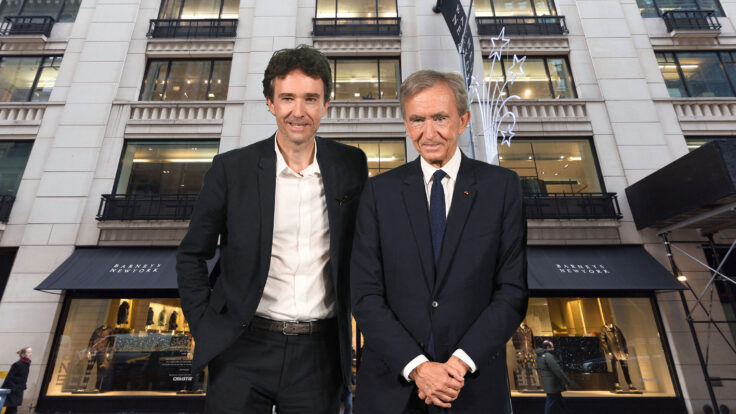
approved Saks Global C.E.O. Geoffroy van Raemdonck’s restructuring plan. The strategy calls for reducing debt by 75 percent while generating $9 billion in gross merchandise volume—transactions conducted both online and in stores—and achieving double-digit profitability by
2030. (Usual disclosure: Saks Global has sued Puck over our reporting on its financial condition.) Again, wholesale is broken and there’s no consensus on how it can be fixed at scale.
A growing number of consumers are buying secondhand anyway. The resale market has become intensely competitive, especially in the U.S., where consumer spending remains strong and foreign companies are rushing to establish a foothold. The biggest entrant is European peer-to-peer resale superpower Vinted,
which, as I reported last month, is expanding into the U.S.—and using bodegas as a distribution source in the New York market. Vinted’s competitors have taken notice. On Tuesday, ThredUp—the high-street consignment reseller—announced that users will be able to list items directly on the platform and set their own prices. Like Vinted, ThredUp is forgoing seller fees. The
peer-to-peer model is a lower lift for the platform and a profitable way to increase listings.
|
|
|
|
Anyway, it’s all just another reminder that as much as we’re all pining for the dream of the ’90s, consumers
are more likely to get excited about live commerce than driving to the mall. I, like many of you, have tried to ignore the whole influencer-meets-Home Shopping Network phenomenon. But the category is gaining too much momentum in the West, largely because of TikTok Shop. On Tuesday, StockX, the sneakerhead resale emporium, announced plans to introduce live auctions this summer.
Meanwhile, just last week, Vinted’s venture arm participated in a $26 million funding round for Tilt, an
A.I.-powered startup attempting to become the U.K.’s version of Whatnot, the live-shopping platform that generated $8 billion from livestreams last year. Even if they don’t integrate it anytime soon, it’s a smart bet on a format that is already driving purchases. While much of the industry is focused on reclaiming the past, some of its most influential players are investing in the future.
|
Re: the outing of Boring Not Com: “The best solution is to collectively decide to not talk about Boring Not Com. We as a society have really fallen off on shunning. But it was remarkably effective for centuries! Bring it back!” —A really smart marketing executive
Also re: Boring Not Com: “Please unmask! I would respect anonymity more if they didn’t express themselves with such nastiness.” —A P.R. who has felt the wrath
Re: the evolution of the WWDC look: “Never forget Angela Ahrendts wearing a pink lace Burberry trench on the Apple stage when she headed up the stores.” —A designer
|
Have a great weekend,
Lauren
P.S.: We use affiliate links because we are a business. We
may make a couple bucks off them.
|
|
|
|
Puck founding partner Matt Belloni takes you inside the business of Hollywood, using exclusive reporting and insight to explain
the backstories on everything from Marvel movies to the streaming wars.
|
|
|
|
The industry’s go-to source for unflinching reporting on the trillion-dollar business of artificial intelligence - perhaps the
single most important technology of our time. Ian Krietzberg, the powerhouse journalist behind The Deep View, delivers twice-weekly insights into the latest dealmaking and breakthroughs in A.I., and how the intersecting worlds of finance, entertainment, media, and politics are being transformed in its wake.
|
|
|
|
Need help? Review our
FAQ page or contact us for assistance. For brand partnerships, email ads@puck.news.
You received this email because you signed up to receive emails from Puck, or as part of your Puck account associated with . To stop receiving this newsletter and/or manage all your email preferences, click here.
|
Puck is published by Heat Media LLC. 107 Greenwich St., New York, NY 10006
|
|
|
|
|