Welcome back to Wall Power’s Inner Circle. I’m Marion
Maneker.
The Aldrich Museum in Ridgefield, Connecticut, is a small but influential institution with a proud distinction as one of the first museums of contemporary art in the United States. It was founded in 1964 by fashion designer turned art collector Lawrence Aldrich. Instead of creating a private institution, Aldrich sold his personal collection to fund a non-collecting museum that focused on “providing first significant opportunities to
emerging or under-recognized artists,” as director Cybele Maylone put it. This month, the museum inaugurated its decennial: a survey of artists who live and work in the state that is meant to recur every 10 years. In tonight’s issue, I asked Maylone how the idea came together.
Up top, artist Alma Allen is, again, accusing a publicist of interfering with his Venice Biennale exhibition. And the Independent releases some numbers from its most recent fair as
it prepares to debut at the Breuer Building in September.
🚨 Just a reminder…: Puck’s Inner Circle subscribers get a discount on ARTDAI’s auction database and market intelligence platform, ArtQ One. If you sign up for the monthly package here using promo code INNERCIRCLE, you’ll get the first month for $26, then pay $95 a month thereafter. Or just sign up for
the yearly rate, which works out to only $79 per month. It’s an even better deal. (You just won’t get a discount from us.) I use ARTDAI. It’s the best tool available.
Also mentioned in this issue: Michael Joo, Amy Smith-Stewart, Lucy Lippard, Karla Knight, Jasper Johns, Titus Kaphar,
Kristy Hughes, Raphael Soyer, Ethel Schwabacher, Al Held, Rosalyn Drexler, Lorraine O’Grady, Elaine de Kooning, and many more.
Let’s get started…
|
The Independent’s May results: The folks from the Independent have released some figures from their May fair on Manhattan’s Pier 36. Of the 73 participating galleries, 56 reported sales of 265 works totaling $3.5 million. The majority of those sales were made to new clients, and galleries
reported selling a third of the works they brought to the fair. The new venue attracted more than 10,000 attendees, a 30 percent increase from last year. Of the 265 works sold, 33 percent were priced between $10,000 and $20,000, and 19 percent were priced between $20,000 and $50,000—an increase of eight percentage points in the latter category from 2025. About five works were sold for prices between $50,000 and $100,000.
The Independent 20th Century debuts at its new location in the
Breuer Building from September 24 to 27. Fifty-six galleries will show work from 130 artists, including Raphael Soyer, Ethel Schwabacher, Al Held, Rosalyn Drexler, Lorraine O’Grady, Alice Trumbull Mason, Yves Klein, Lucio Fontana, Elaine de Kooning, and many others.
|
|
|
|
A MESSAGE FROM OUR SPONSOR
|
|
|
|
- Alma v. Resnicow: With all the other complications surrounding the U.S. pavilion at the Venice Biennale, it’s surprising that the real aftershock of the event is artist Alma Allen’s reprise of an accusation he first made in The New York Times in March. In an
Instagram post earlier this week, Allen again claimed that David Resnicow, the former publicist for the U.S. pavilion, had interfered with galleries that might have supported his show in the Giardini. (Perrotin Gallery eventually stepped up.) “I assume his opposition was personal rather than political,” the
artist wrote. “I have never met Mr. Resnicow, but his name came up frequently from individuals who told me he had warned them not to support this year’s American Pavilion.”
Resnicow told the Times three months ago that he’d “never told anyone not to work with Alma Allen,” whose selection was colored by the Trump administration’s disruption of the normal process. That assertion, I’m told, is true. I texted Resnicow earlier today to see if he had any further
comment, and I got no response. But I did speak with someone familiar with Allen’s decision to participate in the Biennale against the advice of supporters. That person explained that the situation played out the way many involved had feared it might. Namely, by accepting the short-notice invitation from an administration lacking art-world experience and connections, Allen became a lightning rod for a wide range of people put off by the whole cultural and political moment.
This, I’m told,
was the substance of what Resnicow laid out for those who sought his advice, since he had provided P.R. support for the previous six U.S. pavilions at the Biennale. (No one could have foreseen the added pressure of the hostilities in the Gulf.) Understandably, Allen feels he has been sacrificed to expiate the sins of others. And it is clear he has been pilloried for many things that lie far beyond his responsibility. But there has also been legitimate criticism of the show—or at least criticism
motivated by nothing more than taking Allen’s art at face value.
|
Now, let’s speak to Cybele Maylone…
|
|
|
|
The director of Ridgefield’s overachieving contemporary art museum is turning her
institution’s gaze to Connecticut artists, making a case for the Constitution State as something more than the land of finance bros and old WASPs.
|
|
|
|
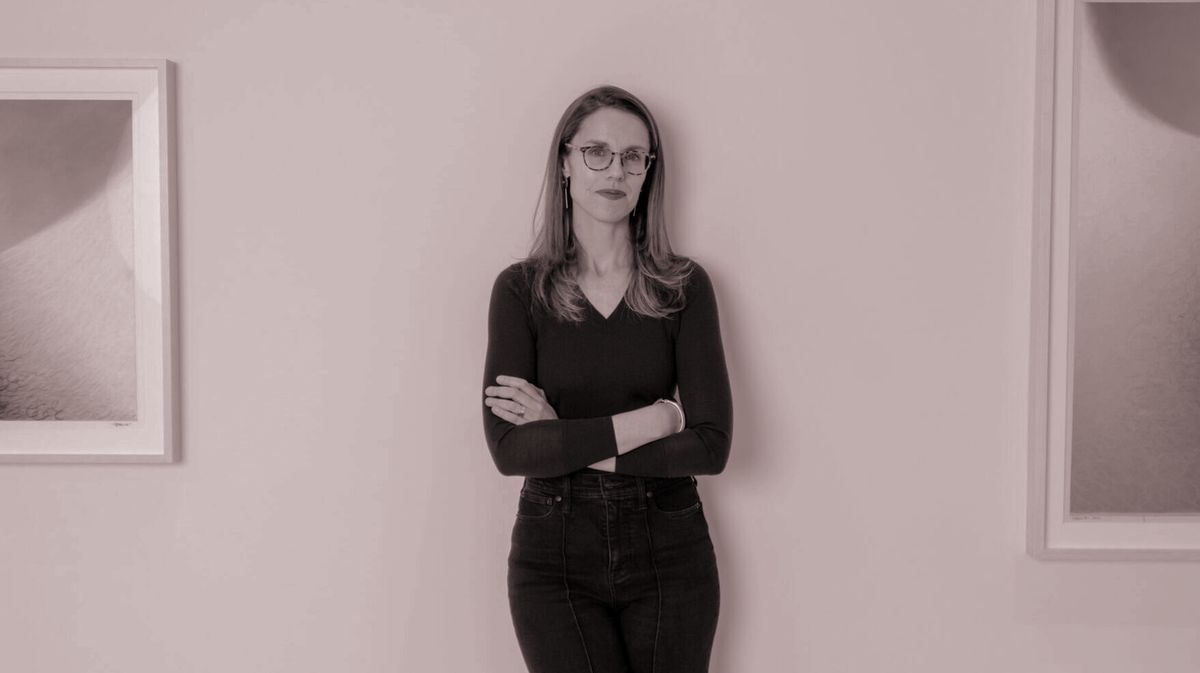
Cybele Maylone, the executive director of the Aldrich Contemporary Art
Museum in Ridgefield, Connecticut, acknowledges that a show focused on her state’s artists might be a tough sell. “Some people may hear the idea of an exhibition of art-making in Connecticut and immediately want to fall asleep,” Maylone told me. But that’s exactly what her museum now plans to do at least once a decade, and they’re kicking off this decennial project with I Am What Is Around Me—the first iteration of the concept, named for a line by Connecticut poet Wallace
Stevens.
It helps, Maylone said, that her chief curator brought “a real excitement about the possibility of discovery that a show like this could possess, and a deep connection to who we are as an institution.” And even if Connecticut is underrated as an art community compared to, say, Maine or Long Island, it has great natural beauty that’s drawn generations of artists, including the earliest impressionists. It also boasts a strong infrastructure to nurture and promote them—not
just the Aldrich itself, but the Wadsworth Atheneum, the New Britain Museum of American Art, the famed Yale M.F.A. program, and the NXTHVN incubator.
|
|
|
|
A MESSAGE FROM OUR SPONSOR
|
|
|
|
In a recent conversation, Maylone discussed with me the mission of Aldrich, which also
shows art from around the country and the world; why noted Connecticut artist Jasper Johns doesn’t appear in the new exhibition; her hopes that the decennial can change people’s understanding of the state; and much more. As always, this conversation has been edited and condensed for clarity.
|
Not
Just a Place to Drive Through
|
Marion Maneker:
The Aldrich Museum has its first decennial, which just opened on June 7. Could you explain what the decennial is, and how you came to decide that the world needed another very long-cycle art gathering?
Cybele Maylone: The decennial’s subtitle for this first iteration is I Am What Is Around Me, which is a line from a poem by the Connecticut poet Wallace Stevens. The series was conceived by the museum’s Diana Bowes chief curator,
Amy Smith-Stewart, and I think it was an idea that was knocking around in her brain for some time. Amy, several years ago, organized a very large exhibition called 52 Artists: A Feminist Milestone, which re-presented the seminal exhibition that Lucy Lippard had organized at the Aldrich. That exhibition was a great example of Amy looking at the museum’s history and pulling it forward. She really identified that, in the 1980s, the museum had done
two exhibitions that looked at art-making in Connecticut.
This was during our founder Larry Aldrich’s lifetime. He lived here in Ridgefield, and there’s been this interest in artists from Connecticut throughout our program—most recently, Amy organized a solo exhibition with the artist Karla Knight, who lives and works in the state. But we’d never made an explicit commitment to it. Some people may hear the idea of an exhibition of art-making in Connecticut
and immediately want to fall asleep, but Amy brought to this both a real excitement about the possibility of discovery that a show like this could possess, and a deep connection to who we are as an institution. We are the only contemporary art museum in Connecticut, and we are well situated to do something like this—a series that will repeat every 10 years, looking at art-making in the state.
Connecticut can be seen as a vast suburb of New York, but that obscures a fairly long
history as a community of creators, whether it’s the Playhouse in Westport, Yale with its preeminent arts school, or the growing community in New Haven.
I’ve thought a lot about places like Maine or the East End of Long Island that share some of what we have. Don’t forget, Connecticut has incredible natural beauty. Some of the earliest impressionists were drawn to the Long Island Sound, to places like Cos Cob and East Lyme. We have some of those things that communities thought of
as places for artists have, but we don’t live in the public consciousness as a place that possesses them. Hopefully the show can change that understanding of Connecticut.
Yes, it is home to many suburbs and many people who work in finance, but it’s also home to incredible institutions. The Wadsworth Atheneum is the oldest [continuously operating] public art museum in the country. The New Britain Museum of American Art is the oldest self-identifying American art museum in the
country. And then you look at the generations of artists that have actually lived and worked here—some of these titans of American art history were quietly working away here. Some of those people are still doing that. It’s an exciting opportunity to give voice to that history and try to expand people’s understanding of a state that they might otherwise just drive through.
Tell me about the organizing principles behind the show.
Amy is organizing this first
iteration with another member of our curatorial team, Caitlin Monachino. When Amy sat down to look at the parameters, she really wanted to embrace geographic diversity—meaning we did not want this show to just be an exhibition of people that have gotten M.F.A.s at Yale in the last 10 years. She wanted to also embrace diversity of age. It’s a really intergenerational list that extends between people in their 30s and artists in their 80s. They did more than 100 studio visits to
select the 40 artists, really making sure there was no corner of the state that wasn’t being explored, and no type of work that was being ignored. It’s a really broad range of materials and making.
You gave Jasper Johns a pass, I assume?
That’s a very good question. One of the criteria Amy conceived of initially was that we would not include artists who’d had solo museum exhibitions in Connecticut. We also really wanted to make sure these were artists that made
their life in Connecticut—someone with a weekend home who might spend a couple of weekends here a year didn’t qualify. We really wanted this to be people who are embedded in the community.
So much of what we do is about discovery—providing first significant opportunities to emerging or under-recognized artists—and someone like Jasper Johns is widely understood to live in Connecticut and has exhibited at the Aldrich many times. Titus Kaphar is another example: He’s had a
huge impact on art-making in Connecticut, but as a result is widely understood to live and work here. The more interesting part of the show is including artists that, even for us, have been a surprise to find in our backyard.
|
|
|
|
You mentioned Titus Kaphar and Yale. New Haven has become a focal point, with
NXTHVN as an incubator and support system. What does this reveal about New Haven’s role in the state’s art community?
There’s always been a deep connection to Yale; it’s the oldest art school in the country. There is an artist on our board named Michael Joo, who got his M.F.A. from Yale and has also taught there for many years, and he said it’s been notable to see how the mad rush from New Haven has changed in the past decade. The story that Michael tells of
people getting their M.F.A. and not even slowing down on their way to New York—now it’s just a totally different community.
There are more galleries opening. NXTHVN has really intentionally built a program that says, We want artists to be here. It has obviously encouraged those artists that have gotten their M.F.A.s at Yale to stay, but it has also been a beacon for artists from other parts of the country to come, either through the fellowship program or just to find studio
space. There is an artist, Kristy Hughes, who’s in the exhibition, did not go to Yale, was a NXTHVN resident, and has stayed.
Let’s finish by talking about the Aldrich’s role. It’s not a collecting museum, which allows you to focus on exactly these kinds of programs. But I didn’t realize the extent to which you consider your locale part of your mission.
In many ways, we don’t. We are not an institution that is—exhibition in and exhibition
out—completely consumed with our place. We’re showing the work of artists from around the country and around the world. But I do think there’s been this quiet throughline for 40 years around art and artists in Connecticut, and making an explicit commitment to it—but not [making it] the totality of who we are—feels like an important step.
The title, I Am What Is Around Me, is in many ways looking at us as an institution: How are we defined by the artists around us? These artists
are a significant part of our audience. I’ve gotten to know so many of the residents at NXTHVN, not because they’re necessarily in all of our shows, but because they’re coming here and seeing what their friends are doing. It’s a part of our mission that we’re a place-based organization doing work in real time in a very particular place, and we have a really unique opportunity to tell a different story about that place. When you put this program within our larger program that’s expansive and
far-reaching, it hopefully says to our audience that the art being made in Connecticut right now, in 2026, is just as interesting as this exhibition we did of an artist from L.A. two years ago, or this show we’re doing two years from now with an artist who lives in Guadalajara.
|
Maya Tribbitt helped edit this interview. I will be heading to Ridgefield next
month to see the show and maybe grab some ice cream at Deborah Ann’s in the village. You should think about making the trip, too, if you’re in the area.
Catch you on Friday,
M
|
|
|
|
Puck founding partner Matt Belloni takes you inside the business of Hollywood, using exclusive reporting and insight
to explain the backstories on everything from Marvel movies to the streaming wars.
|
|
|
|
Unique and privileged insight into the private conversations taking place inside boardrooms and corner offices up and
down Wall Street, relayed by best-selling author, journalist, and former M&A senior banker William D. Cohan.
|
|
|
|
Need help? Review our
FAQ page or contact us for assistance. For brand partnerships, email ads@puck.news.
You received this email because you signed up to receive emails from Puck, or as part of your Puck account associated with . To stop receiving this newsletter and/or manage all your email preferences, click here.
|
Puck is published by Heat Media LLC. 107 Greenwich St., New York, NY 10006
|
|
|
|
|