Welcome back to Wall Power. I’m Marion Maneker.
Sad news this
morning: David Hockney died a few weeks short of his 89th birthday. He had an extraordinary career in art that was supercharged by immense public recognition in the last decade of his life—not that he was overlooked in the earlier years.
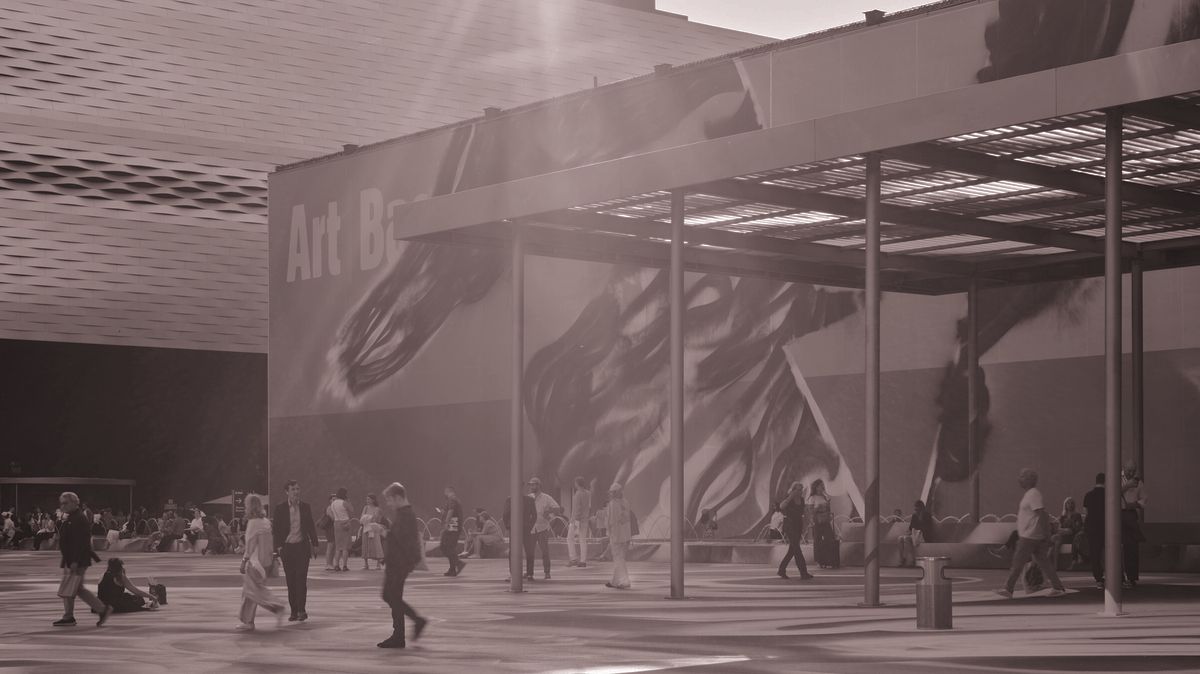
Tonight, the art world is either already in Switzerland or on its way there for Art Basel in Basel, the granddaddy of art fairs. I gathered a bit of intel on everybody’s plans for the event. I also listened to a number of dealers
gripe about the changing dynamics of art fairs.
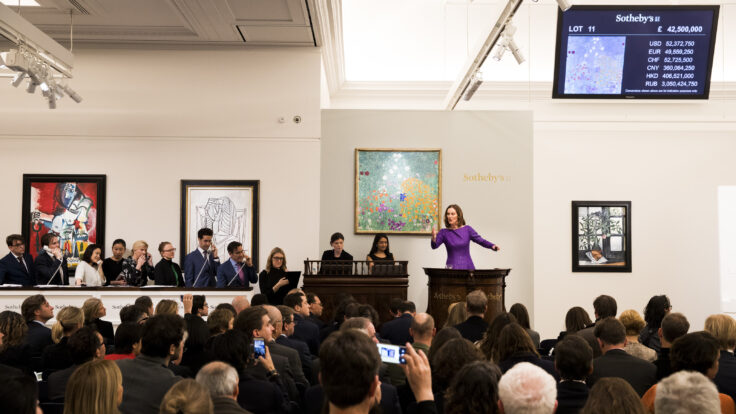
Up top, I’ve got some results from the design sales this week in New York. Plus, Sotheby’s has added two expensive Monets to the London sales, and the auction house’s private selling exhibition in Zurich will take advantage of the pilgrimage to Basel.
Also mentioned in this newsletter: Marlo Thomas, Emmanuel de Bayser,
Barbara Gladstone, Alexandra Marshall, Hank McNeil, Pierre Chareau, Gaston Suisse, William Griswold, Marcel Breuer, Rafael Viñoly, Anne Bass, Philippe Ségalot,
David Rothschild, Johan Nauckhoff, and more.
Let’s get after it…
|
Sotheby’s takes Zurich: Since auction houses still are not allowed into prestigious art fairs like Art Basel in Basel (or any other fair, for that matter), Sotheby’s has loaded $30 million worth of art into their relatively new Zurich location, right across the street from the famous Kronenhalle restaurant. The private selling exhibition is meant to attract traditional European and Swiss collectors, and some of the younger generation of new buyers, who seem to be emerging out of
Geneva with a mix of modern and contemporary works ranging in price from $300,000 to $6 million.
The show, titled Jump In, was put together by David Rothschild, who heads private sales in contemporary art for the U.K., and Johan Nauckhoff, Sotheby’s head of fine art for Switzerland, who expects to see significantly more foot traffic in the gallery space than the 1,200 visitors they had during last year’s debut. The new show includes an
Edgar Degas pastel on canvas of two ballet dancers, an Andy Warhol Four Jackies, plus works by Claude Monet, David Smith, Gerhard Richter, Yayoi Kusama, Georges Braque, Giorgio de Chirico, George Condo, Lucio Fontana, Pablo Picasso, Bridget Riley, and Albert
Oehlen.
So far, the response has been promising. Rothschild told me they sent out the preview on Wednesday, and sold an untitled Etel Adnan painting within an hour.
|
|
|
|
A MESSAGE FROM OUR SPONSOR
|
|
|
|
- Design keeps ticking over with solid results: The New York design sales did well. Sotheby’s sold $17 million in the main various owners sale, with the top lot—Marlo Thomas’s console table by Diego Giacometti—making $5.7 million. That wasn’t quite the $10 million paid for a similar
table in 2024, but it’s a healthy rise from the $3.9 million paid for another example in 2025. Two different lots of Jean Royère furniture sold above their estimates: a three-piece sofa suite for $640,000, and an “ouef”
sofa for nearly $717,000. Emmanuel de Bayser’s sale made $10.5 million. And the sale of Barbara
Gladstone’s art and design (which was mostly art) brought in close to $8.9 million, with few surprises.
Over at Christie’s, the design sale totaled a little more than $20 million. François-Xavier Lalanne’s set of four frog fountains, made for Houston decorator Alexandra Marshall, sold for nearly $6.3
million. A Diego Giacometti side table, estimated at $250,000, sold for $660,000. Two Alberto Giacometti lamps sold for more than twice their $150,000 estimates. Hank McNeil’s George Nakashima
table was estimated at $40,000 but sold for $330,000. A pair of Pierre Chareau chairs, estimated at $70,000, sold for nearly $280,000; and a Gaston Suisse low table that was
estimated at $60,000 sold at the same price. A console by the same maker, estimated at $40,000, sold for $228,000. There were a number of other lots in Christie’s
sale that performed similarly.
Phillips’ sale took place this afternoon where this Georges Jouve mirror was estimated at $50,000 but sold for $245,000; and this Elizabeth Garouste and
Mattia Bonetti desk and armchair were estimated at $30,000 but sold for nearly $168,000.
- Cleveland museum seeks $600 million in art and cash after record year: The Cleveland Museum of Art, one of the U.S.’s great art museums, has publicly announced a new $600 million fundraising campaign. So far,
the museum’s director, William Griswold, has secured more than $350 million in cash commitments toward a goal of $400 million. After a year of record attendance and membership in 2025, the museum is looking to the public to raise the final $50 million. There has also been $128 million in promised gifts of art.
The museum was founded in 1913 and expanded multiple times, including with a Marcel Breuer–designed addition completed in the 1970s. Beginning in
2001, several additions were demolished (but not Breuer’s) to create an integrated expansion designed by Rafael Viñoly that was finished in 2013.
|
$50 Million in
Monet’s Art Added to London sales
|
Claude Monet, Nymphéas (1907). Photo: Courtesy of Sotheby’s
|
The London sales are suddenly shaping up to be a major market event. Sotheby’s announced yesterday
that it would be offering two paintings by Claude Monet during the modern and contemporary evening sale. Both works come from the same unnamed collector, who seems to have decided at the very last minute to sell the works. One is a portrait of Camille, the artist’s wife, who died at the age of 32 in 1879, painted in 1870-71. The seller bought it for $12 million at auction in 2018. It’s being offered with a £7 million estimate, which would put the final selling
price right near the amount paid eight years ago.
The second, more significant work is a square Nymphéas, painted in 1907, that was owned by Anne Bass for nearly 40 years and sold for $56.5 million during the sale of her estate. That sale took place in 2022, a year when auction sales of Monet’s work reached a record $539 million—far more than the previous peak years of 2015 and 2018, when $335 million and $356 million worth of his art was sold, respectively. This
time around, the painting is being offered at £30 million, which would work out, after fees, to slightly under what the consignor paid.
|
|
|
|
A MESSAGE FROM OUR SPONSOR
|
|
|
|
Naturally, we’re all wondering what this consignment means for the broader market.
Prominent works resold only a few years after they were purchased generally have to take a step back in pricing. But if the consignor’s goal is just to break even, that’s a good sign. As I’ve pointed out before, market recoveries often feature sales of works bought during the previous peak years as regretful buyers are eager to get most of their money back—it’s a sign of capitulation and market renewal. On the other hand, there has not been much high-quality Monet on the market in recent years;
there’s been plenty of inflation; and there seems to be an appetite for works of undisputed quality with great provenance. The Nymphéas seems like the ideal lot to test the proposition that the market is ready to reprice great works. Obviously, we’ll all be watching.
Now let’s talk about Basel…
|
|
|
|
It’s still an honor for smaller galleries to show at Art Basel, but global
expansion is putting pressure on them to bring exclusive works to the fair without publicizing their packing lists in advance. Now, some galleries are asking themselves whether they can even afford to participate.
|
|
|
|
As just about everybody in the art world knows, the spectacular success of Art Basel
Paris has put some pressure on the original art fair’s value proposition. Decades ago, when the art world seemed smaller, and there were few other competing fairs of global importance, getting access to the booths in the Basel Messeplatz was a competitive sport. People not accustomed to waiting in lines would queue at the venue’s glass doors to sprint to their favorite booths. In the days before PDFs of packing lists became ubiquitous, a first look meant getting the first opportunity to put a
work on “reserve” or make an offer. It’s an oft-told story, but around 20 years ago, private dealer Philippe Ségalot hired a makeup artist so he could recon the hall unrecognized as the galleries set up their booths. It’s almost impossible to imagine anyone taking those measures today.
It should not be a surprise that there’s a certain kind of nostalgia for those boom years in the art market, or that it attaches to the fair in Basel, which still invokes an old-fashioned
retail environment even as galleries inhabit a multichannel distribution network. In March, I first started hearing that pressure was building on Art Basel’s management to do something about the galleries sending PDF previews of their fair booths to their entire collector base days or weeks in advance. The most extreme solution proposed was that Basel become a preview-free fair; collectors would have to show up to see the goods. (How the fair would enforce that is anybody’s
guess.)
Instead, the fair opted to create a program called Basel Exclusive, where galleries voluntarily hold back works that can only be seen on the stands. Some global galleries, like Hauser & Wirth, have already adopted this practice—they include surprise “drops” that debut at the fair. But independent galleries without the resources of the bigger firms are nervous about holding back their best works. After all, Art Basel is really engaging in a marketing campaign to attract attendees,
something that is meant to be accomplished through its famous V.I.P. program.
Either way, not long after Basel Exclusive was announced, I started hearing complaints from some galleries that the fair had imposed the program on them without much consultation, or even their explicit agreement to participate. And, although gallerists love to complain about their treatment at the fairs, there does seem to be a sense this year that Art Basel is pursuing the ambitions of James
Murdoch, its new owner—who is trying to create a destination “ideas” event in Basel sometime in the future—more than it is engaged in helping galleries make sales.
|
|
|
|
At the center of this conflict over PDF previews is the soaring cost of an art fair,
especially one in a town like Basel, which is notorious for not having much in the way of accommodations, despite having a huge convention center that is part of the company that owns the fair. It is interesting that we did not hear much complaining about the hotels and restaurants for most of the first 50 years of the fair’s existence. But once Art Basel Paris debuted three years ago, the disparity between the cost and the quality of accommodations in Basel became a constant topic of
conversation, even after the Trois Rois, the city’s best hotel, completed a large expansion just in time for last year’s fair.
After talking to several smaller galleries who have a coveted spot at the fair in Basel, I can see the bind that the Exclusive program puts them in. In an ideal world—or even the art world that existed 20 years ago, when Ségalot was getting a hairpiece and Coke-bottle glasses fitted—the galleries would bring their rarest and most sought-after works to Basel to
debut on the stand. They would probably sell them, too. But now there are many more fairs, and a gallerist doesn’t know where the next great collector is going to encounter their program, or whether they might have to crate up the work they brought and send it home.
Doing the fair used to be a marketing expense for many of the smaller galleries. Basel in Basel was, and still is, an exclusive club that separates a participating gallery from those without the artists, expertise, or
reputation to be selected. I spoke to one independent gallery whose owner was more than happy to comply with the Basel Exclusive program. Showing at Basel was a huge advantage to the dealer, who just had to figure out the right work to meet the fair’s criteria. But others worried that the type of work that might fit the bill for Basel Exclusive would be exactly the kind they could sell from their desk at home without incurring all the expenses of doing the fair.
One dealer told me this
week it cost their gallery $400,000 to attend, including shipping, accommodations, and the fair’s own fees. For a smaller gallery, that might make sense, even if you are introducing a lower-priced artist you’ve done well with elsewhere to a new audience of European collectors who now dominate Basel. (Many Americans are opting to go to Paris in the fall.) But if you also have to bring some of your most sought-after artists’ work to the fair, you risk cutting into the profits you might have made
selling the work without incurring the shipping costs.
Shipping has also become much more fraught these days with the disruption in the Gulf, which has raised the level of risk around doing a fair. Several galleries told me they heard that a few of their peers sent inventory to Art Basel Qatar in February that still has not made it back. “The vast majority of artworks have now left Qatar and safely reached their final destinations,” an Art Basel spokesperson told me when I asked about the
works trapped by the hostilities. “A small number of works remain in Doha largely owing to the geopolitical situation and ensuing restrictions on airspace and maritime routes in the period following the fair.” The fair added that it has been actively working on solutions for those galleries affected.
For every gallery that’s frustrated by the rising costs and the risks of showing in Basel, there are a number of others that would be happy to have the opportunity to take their place. At the
same time, there are some galleries that would happily give up their spot in Basel for a shot at Paris. As the art world hierarchy reshuffles, Art Basel will have to think hard about what will draw collectors. Maybe Murdoch has the right idea. The secret to making Basel a must-attend event lies more in increasing the allure of Basel than in holding back art.
|
This New York Times
story about Google Gemini identifying a thrift store art purchase as a work by Scottish colourist Francis Cadell, which then sold for a quarter of a million dollars at auction this month, was a curious affair. Even though the consignors felt strongly that the work was important, they were reluctant to ask an expert for
guidance. The Times characterizes the thinking of the owner’s son this way: “It would have been a hassle to transport [the painting] to an auction house, just to be turned away.”
Of course, this isn’t how the art trade works at all. Christie’s sold a $27 million Michelangelo drawing that it first learned about through an unsolicited photograph submitted cold to the company’s “request an estimate” service. I can imagine that the auction houses are trying to use
A.I. to improve those services, automating hits that are worth further investigation. But can they get the public to understand that these services exist, and are discreet and welcoming? That seems to be a real hurdle.
With that, I’m going to wish you all a great weekend. There was a wild South Asian art auction in London this week that I didn’t have space to cover today. I’ll try to give you that update on Sunday, with much more to boot.
Until then,
M
|
|
|
|
Puck founding partner Matt Belloni takes you inside the business of Hollywood, using exclusive reporting and insight
to explain the backstories on everything from Marvel movies to the streaming wars.
|
|
|
|
Unique and privileged insight into the private conversations taking place inside boardrooms and corner offices up and
down Wall Street, relayed by best-selling author, journalist, and former M&A senior banker William D. Cohan.
|
|
|
|
Need help? Review our FAQ page or contact us for assistance. For brand partnerships, email ads@puck.news.
You received this email because you
signed up to receive emails from Puck, or as part of your Puck account associated with . To stop receiving this newsletter and/or manage all your email preferences, click here.
|
Puck is published by Heat Media LLC. 107 Greenwich St., New York, NY 10006
|
|
|
|
|