Welcome back to The Best & The Brightest. I’m Peter Hamby.
Tonight, as the
war in Iran rages on, I have exclusive new focus-group data demonstrating a political and emotional revolt from a core group in Donald Trump’s winning 2024 coalition that really doesn’t want to think about war: young men. I got a sneak peek at a groundbreaking new A.I. platform that can track political sentiment almost in real time—and used it to find out how America’s Gen Z dudes are reacting to the once antiwar Trump’s new fondness for military
adventures.
Mentioned in this issue: John Thune, John Cornyn, Ken Paxton, Raja Krishnamoorthi, Juliana Stratton, Robin Kelly, Jesse Jackson Jr., Mike Mezza, Kamala, Biden, Sam Rowe, Tabish Sangrar, Stephen Kennedy Smith, John Della Volpe, and
more…
|
|
|
|
Instagram Teen Accounts: Automatic protections for teens
Instagram Teen Accounts have built-in protections for who can contact teens and the content they can see. Now, content settings are inspired by 13+ movie ratings, with a stricter setting available for parents who prefer extra controls.
Nearly 95% of parents say Instagram Teen Accounts help safeguard their teens. We will continue adding features to help protect
teens online.
Learn more
|
|
|
|

|
Abby Livingston
|
|
With Illinois’ Democratic Senate primary just a week away, a
new poll found Rep. Raja Krishnamoorthi continuing to hold his polling lead at 39 percent, with Lt. Gov. Juliana Stratton trailing at 28 percent and Rep. Robin Kelly in third place with 12 percent.
Yes, the survey, conducted by Tulchin Research, was paid for by a pro-Krishnamoorthi group. But the result also
isn’t surprising: Krishnamoorthi has led in most polling since the start of the race, and has had a staggering cash advantage ($30 million stockpiled over the last several cycles), although some recent polls have shown Stratton closing the gap and even winning. Still, there are still enough undecideds—15 percent—to make this race interesting until Election Day on Tuesday (also St. Patrick’s Day, which could either suppress or inspire turnout…).
Elsewhere in Chicago, the stars may
be aligning for a political comeback. Former Rep. Jesse Jackson Jr.—who was convicted in 2013 of spending $750,000 of campaign money on personal expenses, and spent more than a year in prison—hasn’t run the most compelling campaign for his old House seat. But he’s benefiting from $1.1 million in
support from a pro-A.I. PAC, while a crypto PAC spent $735,000 clobbering one of his Democratic primary rivals. He also started the race with high name ID, though it was supercharged by the death of his father, Jesse Jackson Sr. “Probably means this is Jr.’s race,” a Chicago Democratic consultant told me. “Sheer media coverage alone!”
|
Texas Sen. John Cornyn is still in Trump-endorsement limbo in his runoff race against the state’s
attorney general, Ken Paxton—and each passing day not only strengthens his polarizing challenger, but also jeopardizes the Republicans’ hold on the seat. In exchange for the nod, Trump is demanding passage of the SAVE America Act, which would require proof of citizenship to register
to vote and proof of photo ID to cast a ballot, while eliminating mail-in voting. “If [Trump’s] going to do it, he needs to do it in the next week,” an anxious Texas donor told me on Friday.
That seems less likely after today, when Senate Majority Leader John Thune—a Cornyn backer himself—took the mic after the Senate lunch to say he did not have the votes to move on a “talking filibuster” to pass the bill. “I can guarantee the debate. I can guarantee a vote,” Thune said.
“I just can’t guarantee an outcome.”
|
|
|
|
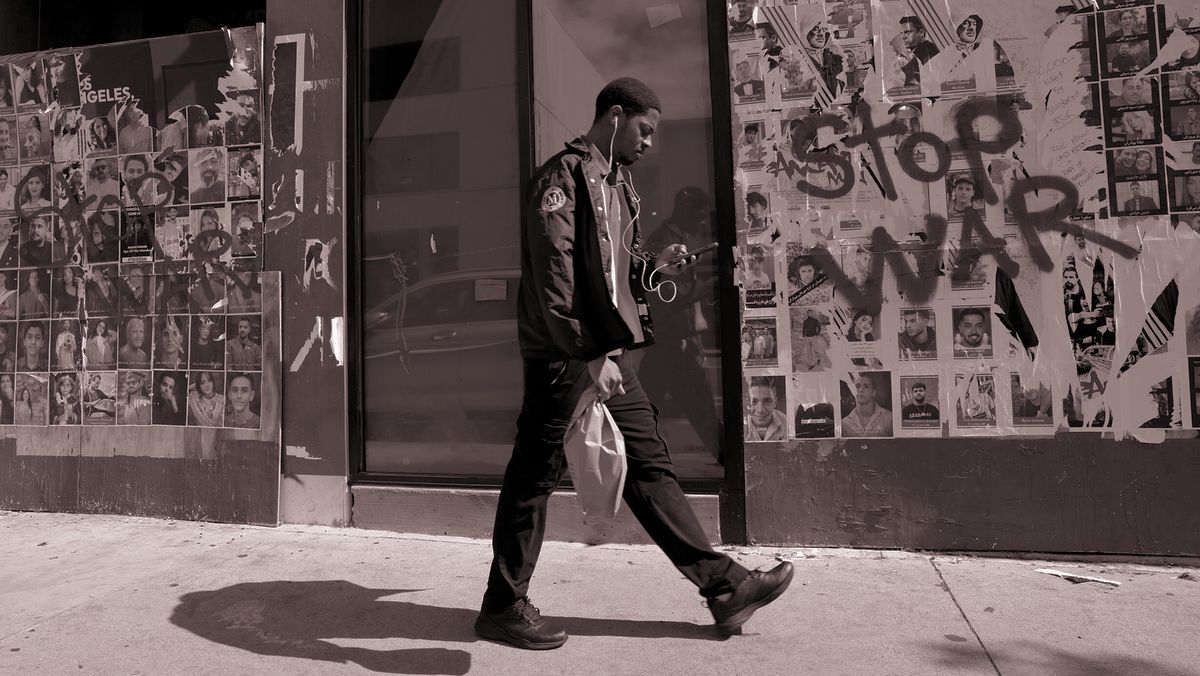
An innovative new survey, conducted this week, finds that young men are overwhelmingly
opposed to Trump attacking Iran, frustrated that the government is ignoring their economic needs, and terrified that the “no new wars” candidate will send them off to die overseas.
|
|
|
|
Back in late 2024, when I was touring college campuses and interviewing students about the election, a topic
rarely discussed in Washington kept popping up in my conversations. Young men were telling me, over and over again, that they were worried about being drafted into war. “I’m voting for Donald Trump,” Mike Mezza, a senior at Penn State, told me that November. “It’s the rising threat of rising global conflict. As somebody who is a military-age
male, that thought is scary.”
At the time, Russia was almost two years into its grinding war in Ukraine, and Israel was punishing Gaza with no end in sight. Trump was on the campaign trail, promising to end foreign wars. His pledge, dubious at the time and laughable in hindsight, nevertheless resonated with plenty of young men on the precipice of adult life and looking out at an uncertain world. Trump was playing to their fears—and those of their parents, too. Kamala
Harris is “already talking about bringing back the draft,” he said, falsely, at one 2024 rally in Las Vegas. “She wants to bring back the draft, and draft your child, and put them in a war that should never have happened.” (White House Press Secretary Karoline Leavitt went viral in a bad way this week for dodging a question about whether Trump would draft young men to fight in Iran.)
To this day, in the midst of Trump’s military adventurism,
liberals continue to bombard my mentions on Twitter/X, demanding that I apologize for highlighting the concerns of those dopey, misguided college kids who were worried about a draft that was never going to happen under a President Biden or a President Harris. Well, I’ll do them one better. This week, I got my hands on a pair of large-scale qualitative surveys of young men, conducted using a groundbreaking new A.I. research
platform—focus groups of dudes talking about the war, basically—showing that even young Trump voters are furious with the president for attacking Iran and breaking his promise to avoid foreign wars.
|
|
|
|
Instagram Teen Accounts: Automatic protections for teens
Instagram Teen Accounts have built-in protections for who can contact teens and the content they can see. Now, content settings are inspired by 13+ movie ratings, with a stricter setting available for parents who prefer extra controls.
Nearly 95% of parents say Instagram Teen Accounts help safeguard their teens. We will continue adding features to help protect
teens online.
Learn more
|
|
|
|
Here’s a sample of their opinions, collected yesterday as Trump was facing blowback over rising gas prices, the death of a seventh American soldier, and mixed messaging as to what the war is even about:
Jacob, a 28-year-old Black man in Arizona who leans Republican, on whether the U.S. should be supporting regime change in Iran: “I don’t know if I think the U.S. should be supporting regime change on the other side of the world. I just think let the people who live
over there handle it, and focus more on internal and domestic problems. We have enough of them here.”
A 21-year-old Asian man in Georgia, who declined to be named but has voted Republican in the past, on whether ground troops should be sent into Iran: “Hell no. Are you crazy? You know, bro, Iran is filled with mountains and you already have troops dying and they’re not even on the ground. That would be ridiculous.”
Bryson, a 26-year-old white man in South Carolina
who voted for Trump, asked to describe his reaction to the airstrikes on Iran: “It was disgust because … Trump said he wasn’t going to start any new wars. So why would he bomb Iran if he wasn’t going to start any new wars? The only reason I could think of is Israel.”
A common sentiment surfaced across candid interviews with 55 young American men between the ages of 18 and 29, of all races and political backgrounds, some Trump voters and some not: Young people aren’t processing Iran as
foreign policy. … They’re experiencing one reality. A government that has billions for bombs and nothing for their rent. Every dollar spent on the war registers as a dollar not spent on them. Trump’s “no new wars” promise was the clearest, most testable commitment he made to young voters. Its violation is now the anchor story for a broader trust collapse.
There’s something else notable about that big takeaway: I didn’t write it. An A.I. tool did.
|
These focus-group responses were collected with a pioneering but still-unreleased research tool called
CrowdVox, an A.I.-powered platform that conducts conversational voice interviews with Americans nationwide at scale, in near real time. In a matter of minutes, CrowdVox can translate those conversations into insights about public opinion and sentiment analysis of news events and political currents. It was co-founded last year by a quartet of Cambridge-based researchers and A.I. savants: Sam Rowe and Tabish Sangrar on the tech side, and civic activist
Stephen Kennedy Smith and public opinion expert John Della Volpe on the editorial side.
Della Volpe, a longtime expert in youth politics who also directs the twice-yearly Harvard Youth Poll, gave me a first glimpse of the platform on Monday, when I was picking his brain on how young men were responding to the Iran conflict. Both of us have been tracking the sentiments of young male voters for years—since well before the 2024 election—and he asked whether I
wanted to run a quick survey on CrowdVox to get some texture on Trump and Iran.
For political practitioners, speed is the CrowdVox selling point. So it took only a few hours for Della Volpe to send me a fully polished document synthesizing the reactions of dozens of young male registered voters to four questions that I had him pump into the platform: 1) Should the U.S. be pursuing regime change in Iran? 2) Do you support ground troops in Iran? 3) Are you personally worried about Donald
Trump’s military actions since he took office? 4) Generally speaking, is Donald Trump following through on his campaign promises?
Via phone conversations and online chat—all conducted in an A.I. rendering of Della Volpe’s voice—the men reached by the survey said they felt exhausted by the government’s failures to deliver on its promises to their generation, specifically Trump’s choice to engage in overseas conflict rather than focus on bringing down the cost of living. My little custom
survey returned audio interviews with 55 young men of all political stripes: 20 said they were voting Democratic in the midterm elections, while 16 said they were voting Republican. Ten of them who had voted in the past said they would not vote in the midterms at all—including several Trump supporters.
It was a signal—reflected in other polls and survey research showing
Trump losing support with young men over the past year—that whatever faith young men once had in Trump has slipped away. Almost every person reached by CrowdVox said he would prefer that the administration focus on more-pressing economic concerns back home than on foreign wars. “Just leave the country fucking be and let them choose whoever they want,” responded Austin, a 26-year-old white man in Pennsylvania. “Why do we got to put our noses in it, bro? For real. How about we
worry about our own economic bullshit.”
Because the interviews were conducted in real time on Monday afternoon, worries about the price of gas were already percolating. “Trump promised lower prices on oil. That was a complete lie because now gas is like, $4,” said Tyler, a white 27-year-old in Colorado. “He promised lower prices on oil, and he also said groceries would be cheaper. That’s also a lie.”
Della Volpe had also conducted his own research on the war last
week, with similar results. Several Trump voters went out of their way to say the war was a Wag the Dog–style distraction from the spiraling Jeffrey Epstein saga that resurfaced assault allegations against the president (who has denied any wrongdoing related to Epstein) and ensnared his own Justice Department. “It truly pisses me off, honestly,” Bryson, the 26-year-old Trump voter, said of the war. “It makes me regret ever voting for him. It makes me regret even liking
Trump, honestly, and with the whole Epstein shebang that’s going on, he’s really probably the worst pick to be president at the moment.”
Among young Trump-voting men, the surveys registered a divide in his base of support. Some were sticking with him, even if the war made them queasy. “He promised no new wars, but we’re starting new wars,” said Timothy, a 23-year-old white man in North Carolina and hard-line Republican. “However, I believe in our president, and our
country has never been stronger in the last four years, thanks to President Donald Trump.” Another voter, a 21-year-old Black man in Texas, said he was sticking with Trump no matter what. “I trust Donald Trump,” he said.
|
|
|
|
As for other Trump voters who have soured on him, several made clear that they were not planning to defect to
the Democrats. They were simply planning to stay home—effectively disappearing from the electorate—yet another sign that Democrats around the country continue to face a yawning trust deficit and brand problem even as support for Trump craters. “Being honest, I wouldn’t vote,” said Sonny, a 25-year-old white man from New York. “I’ll leave it up for the other people to decide.”
|
The Iran war, however, cuts to an even deeper existential dread among young men. While visiting campuses in
2024, I had to put myself back in my teenage and twentysomething post-9/11 mindset to sympathize with their concerns about a draft, even if they weren’t totally logical. If you’re a jobless, self-absorbed, possibly single young man—and there’s a war afoot in some other country with U.S. interests at stake—why wouldn’t you harbor some worry deep down about fighting and dying overseas? It crosses every young man’s mind—especially, of course, those brave enough to enlist.
In almost every
poll and focus group of Gen Z youth I’ve seen in recent years, what’s emerged is a shared sense that they have no control over their futures or their finances in a scatterbrained society that feels like it’s being reshaped weekly by new technologies, divided cynically by culture and class, and ignored permanently by political leaders. And so, as crazy as it might sound, it made sense that young men prompted about Iran by CrowdVox on Monday went out of their way to express anxieties about nuclear
war, death, and their ability to simply exist. “What concerns me the most is, like, a nuclear war and just knowing that there’s nothing you can do to stop it,” said James, a 21-year-old Hispanic man in California who is undecided in the midterms. Said Louis, a white 19-year-old, also in California: “I’m scared.” Asked to elaborate, he said: “Bombs. Hella bombs. I don’t want to have my home blown up. I don’t want to go to war.”
Austin, a
27-year-old in Indiana, said he knows people who might have to fight and die if the war drags on. “I have friends and family that are going to get caught up in this conflict,” he said. There was also Casey, a 20-year-old Republican-leaning farmer in Iowa who opposes ground troops—and fears he will be one of them. “I’m young, so I’m pretty sure I’d be set up to be drafted. And that’s not really something I’d want to do because I got a farm out in Illinois and that’s what I really
love doing.” And there was Jacob, a 20-year-old white man in Tennessee who said he felt like Trump was “trolling” his generation. “Like, no, this ain’t no game, bro. Our lives are at stake.”
Forget the H.G.H.-infused hype videos that the administration is pumping onto social media to portray the war as some sort of first-person shooter video game come to life. Operation Epic Fury—whether it’s a war or something else that has killed seven Americans so far—actually
scares these young men. The conflict, it seems, is also scaring them away from Donald Trump in an election year… and reminding them once again that his campaign promises have yet to be fulfilled.
As CrowdVox told me in its summary report: “Draft-eligible young men are not processing this as a policy debate. They are processing it as a threat to their physical safety, their homes, and their families. That fear will override partisan loyalty in ways that polling doesn’t capture. Gas,
groceries, rent—these are the standards against which every promise is being measured. Foreign intervention is being weighed on a household budget.”
|
|
|
|
Join Puck’s chief political columnist, John Heilemann, as he roams the corridors of power and influence in America on this
twice-weekly interview show, taking you beyond the headlines with the people who shape our culture: icons and up-and-comers, incumbents and insurgents, moguls and machers in the overlapping worlds of politics, entertainment, tech, business, sports, media, and beyond. The conversations are rich and revealing, unrehearsed and unexpected… and reliably impolitic. A Puck-Audacy joint, new episodes drop every Wednesday and Friday.
|
|
|
|
Unique and privileged insight into the private conversations taking place inside boardrooms and corner offices up and down Wall
Street, relayed by best-selling author, journalist, and former M&A senior banker William D. Cohan.
|
|
|
|
Need help? Review our
FAQ page or contact us for assistance. For brand partnerships, email ads@puck.news.
You received this email because you signed up to receive emails from Puck, or as part of your Puck account associated with . To stop receiving this newsletter and/or manage all your email preferences, click here.
|
Puck is published by Heat Media LLC. 107 Greenwich St., New York, NY 10006
|
|
|
|
|






_01KJWSMS03YFF1F7Y1M4D6TQAB.png "Instagram")