Welcome back to The Best & The Brightest. I’m Peter Hamby, tapping in today for
Julia Ioffe, who is celebrating Passover. Tonight, a review of Donald Trump’s address to the nation on his war with Iran. It was a telling moment that showcased his political weaknesses more than any strength, and a brutal reminder for Republicans in an election year that Trump’s campaign promises of ending wars and lowering prices are now just distant memories.
Also mentioned in this issue: Pam Bondi, Lauren
Boebert, John Fetterman, Mark Kelly, Elissa Slotkin, Nate Silver, George W. Bush, Joe Biden, Kristi Noem, Bradley Devlin, Raheem Kassam, Tucker Carlson, Megyn Kelly, Kamala Harris, and more…
|
|
|
|
Meta apps help over 35 million American businesses grow.
Muscle Car Jr. is one of them. From a single post, it’s grown into a community of over 230,000 car lovers on Facebook, Instagram and WhatsApp — and a thriving business.
“Restoring cars started as a hobby," says Peter, Muscle Car Jr.'s owner. "Now it's a full-time job."
See Peter's story.
|
|
|
|

|
Abby Livingston
|
|
- Here come the hearings…:
Now that Pam Bondi has joined Kristi Noem among the dozen or so cabinet members that Trump has pushed out in his two terms, the Senate will be bracing for yet another round of bruising confirmation hearings to confirm Bondi’s replacement—potentially the president’s former personal attorney, Todd Blanche, who will serve for now as acting attorney general. As with the hearing to confirm Markwayne Mullin, Noem’s successor at the
Department of Homeland Security, the Senate hearings will almost certainly become a referendum on Trump’s weaponization of the department writ large—everything from Bondi’s botched handling of the Epstein files to her unsuccessful attempt to indict Sens. Mark Kelly and Elissa Slotkin, not to mention the growing list of investigations into the president’s political enemies: Bolton, Comey, Jay
Powell, Adam Schiff, etcetera. Chillingly, one of the reasons Trump is said to have lost patience with Bondi is that she wasn’t aggressive enough.
- The war at the gas pump: In the month since Trump launched the Iran war, the conflict has yet to break through as a vote mover for the midterms. “Right now, it’s a 1 percent issue,” a G.O.P. pollster told me. While the conflict is broadly unpopular—57 percent of respondents
in a new CBS national poll said it was going badly—that’s not necessarily a top determinant of party preferences come November. But the pollster said it could grow more important to voters “if things aren’t handled quickly.” Indeed, the sense of dread is palpable among older Republicans I’ve spoken to—they remember how much the Iraq War cost them when they lost the
House in 2006.
Much could get worse by November, particularly if more American service members die—or maybe Trump really will wrap it up in a few weeks and the conflict will fade from the headlines. But the war’s effects are already being felt on an issue voters do care about: affordability, and specifically, gas prices. “The overall affordability/economy issue … is number one in a broad sense,” the pollster said. The same CBS poll found that 90 percent of respondents believe the
Iran conflict will increase gas prices.
Republicans’ traditional advantage on the economy has been slipping since even before the war—to the point, in fact, that Democrats now lead on cost of living issues, according to a December survey from the centrist think tank Third Way. “That’s a big problem” for Republicans, the
pollster said. Some downballot Republicans have already acknowledged this risk. Rep. Lauren Boebert told CNN last month that she wouldn’t vote for any more war supplementals. “I have folks in Colorado who can’t afford to live,” she said.
|
|
|
|
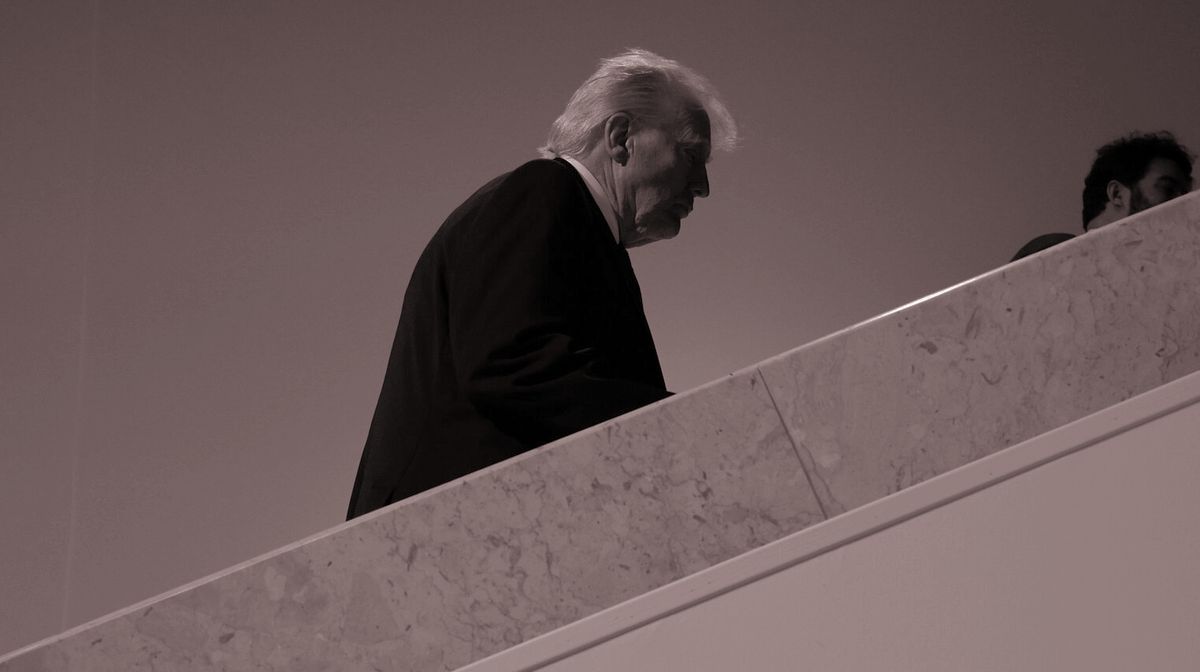
The president has defied political gravity so many times that he’s often assumed to be
invincible. But Trump’s Iran war is inescapable, his approval rating is plummeting—and his rambling White House address exposed that he’s less powerful than ever.
|
|
|
|
Donald Trump built his political career by scrambling American attention spans and preying
on the short-sighted impulses of voters. Which is why a key part of his address to the nation on Wednesday night—about the war in Iran, and why we’re doing the whole Middle East adventure thing again—rang so hollow. “This is a true investment in your children and your grandchildren’s future,” Trump said, conjuring a world that will thrive without a nuclear-armed Iran. Trump promised, once again, that the aerial bombardment will last only two or three more weeks—“the hard part is done”—and that
the United States will be “more prosperous” as a result. Soaring gas prices? They’ll come back down. The Strait of Hormuz? “It’ll just open up naturally,” like a daffodil in spring. Stock prices, down more than 4 percent since the war began, “will rapidly go back up.”
It was amusing, at least, to witness the most divisive president in American history ask voters to put aside their short-term frustrations with gas prices and foreign wars, and instead huddle with our better angels, in the
spirit of shared sacrifice and the hallowed American project. Unfortunately for Trump, voters in this political moment he created do not possess deep wells of trust or patience—the traits he was suddenly appealing to in his speech.
|
|
|
|
This muscle car business started with a single Facebook post.
Muscle Car Jr. connects 230,000+ car lovers across Facebook, Instagram and WhatsApp. That community helped its owner, Peter, turn a passion for restoring muscle cars into a thriving business.
Meta apps help over 35 million U.S. businesses, like Muscle Car Jr., grow.
Learn more.
|
|
|
|
Trump has defied conventional wisdom so many times over the years that he’s often assumed to have political
superpowers that just aren’t there. Every few months, it’s worth stepping back to observe the big picture, ignoring the nostril-flared arrogance and misplaced bluster that emanates from the White House on an hourly basis. Just look at the scoreboard. Numbers don’t lie.
Trump’s approval rating is now at the lowest point in his second term, around 39 percent in Nate Silver’s average, with several high-quality polls showing him even lower, approaching post-Katrina
George W. Bush territory. Trump’s approval rating on the economy is 23 points underwater. His approval rating on inflation is 32 points underwater, notably worse than Joe Biden’s inflation number when he was hustled out of office. Maybe an even deeper cut for Trump: A Harvard/Harris poll this week found more voters preferred Sleepy Joe’s management of the economy. And importantly, in a midterm year, the same poll found that the vast majority of voters blamed the
high cost of living on the current president, not his predecessor.
The very fact that Trump decided to deliver a rare address to the nation was, on its own, an admission of his diminished political stature. He is not playing offense anymore. Almost every available piece of data shows that Americans, including core elements of Trump’s 2024 coalition and independents who turned on him even before the war, no longer believe the president will follow through on his promises. At the
same time, his sudden appeal for patience and goodwill not only contradicts his entire political brand, it comes at a time when Americans can barely make it through a 26-minute Netflix show without looking at their phones. Patience? In this economy?? Good luck with that, sir.
|
No matter their ambitions or agendas, presidents are always tested by events outside their control. What
continues to be so remarkable about Trump 2.0 is that most of his crises are emphatically of his own making. There’s no scapegoat for his crappy polling. It’s not Pam Bondi. It’s not Kristi Noem. It’s not Biden. It’s the orange-tinted guy in the mirror. The fact that Trump decided to launch a go-it-alone war that no one in the world wanted during an election year is political folly of the highest order. Trump continues to describe the war as an “excursion”—easy
chum for jokes about his common butchering of language and idioms—but the term is apt in one very real sense. The war is a dramatic departure from two of Trump’s central campaign promises: to end expensive overseas adventurism and make life more affordable for Americans.
The war, obviously, has only added to America’s costly military burden overseas—and it seems almost perversely designed to inflict economic pain on the working- and middle-class voters Trump promised to protect. Gas
prices are the most visible sore spot, with the average cost for a gallon of regular now up more than a dollar since the war began. In several core battleground states that Trump won by promising to lower prices—Michigan, Arizona, Nevada—gas is now over $4 a gallon.
Benchmark oil futures have surged by more than 60 percent in the past month, and the price of oil rose yet higher on Thursday after Trump’s speech failed to allay fears about the conflict’s widening economic blast radius.
According to The Wall Street Journal, “Prices in March rose by $43.96 a barrel, more than in any other month since West Texas Intermediate futures began trading in 1983.”
|
|
|
|
It’s not just oil. Spiking fertilizer costs are forcing American farmers, already dealing with tariff
uncertainty, to plant less corn and less wheat. Trump, who enjoys claiming that Biden totally destroyed U.S. agriculture and manufacturing, has since commanded John Deere and Caterpillar to lower prices on their farm equipment. As for the American dream of buying a home? Well, mortgage rates had been falling before the war, finally putting home ownership in sight for buyers who have been sidelined by high rates since the pandemic. Sorry, suckers! Inflation concerns sparked by Trump’s war have
sent 30-year mortgage rates back above 6.5 percent. Good luck raising a family, too. “We can’t take care of daycare,” Trump said at a closed-door Easter lunch just a few hours before his big speech. “We’re fighting wars.”
|
The
Butterworth’s Rebellion
|
It’s enough to make one think: Who is this presidency for, exactly? After Trump’s speech, I was struck by the
disappointment of several loyalists who were posting through it. Bradley Devlin, politics editor at the right-leaning Daily Signal, wrote on X: “I would crawl over broken glass for the domestic policy agenda Trump laid out in his State of the Union speech (just over a month ago!). Millions of Americans would, too. But no one remembers that now. It’s all been upended. And it’s really demoralizing.” In that speech—just over a month ago!—Trump rambled through his greatest
hits on wokeness and immigration, but also explicitly promised to bring down grocery prices, lower costs for prescription drugs, make housing more affordable, and hold down energy rates. Trump even bragged that gas prices were only “$2.30 a gallon in most states.”
Devlin’s post about the war was shared by his editor at The National Pulse, Breitbart alum Raheem Kassam, who also happens to be the maître d’ of MAGA Washington as co-owner of Butterworth’s, the Capitol Hill
clubhouse for Trump officials and hangers-on. Kassam doesn’t post a lot of negative commentary about the president, but he’s been sharing bad polling about the war—e.g., the RealClearPolitics average showing that 54 percent of Americans now disapprove of the war, with a trendline that should deeply concern the White House.
By now, we know
that elites and thinkers on the populist right—Kassam, Tucker Carlson, Megyn Kelly—hate this war even as most Republicans remain aligned with Trump. Despite some slippage since the war began, polls show that around 80 percent of Republicans still support it. Republicans alone, though, didn’t elect Trump—and their support won’t be enough to defend the G.O.P. majority on Capitol Hill this November. It was swing voters (suburban dads, independents) and
low-propensity types (young men, Latinos) that gave Trump the margins he needed to defeat Kamala Harris in 2024. Those voters are now gone.
A year ago, male voters aged 18-29 gave Trump a 55 percent approval rating, according to polling from SocialSphere. Before the war, that number had dropped to 45 percent. Since the war? It’s fallen further, with just 38 percent of young men approving of the president. It gets worse. His approval rating among those coveted Latino
voters is just 32 percent, according to YouGov and The Economist. Meanwhile, Trump’s approval rating among independent voters is now at toilet-sniffing levels, a lowly 22 percent in the same poll, with even lower support for the war in Iran.
Those are calamitous numbers for a president just over one year into his term. Remarkably, almost all of it is self-inflicted. But the Republican death march to the midterms is not surprising because Trump did the one thing you’re
never supposed to do in politics: He looked voters in the eye, made promises, and then turned around and broke them.
|
|
|
|
Join Puck’s chief political columnist, John Heilemann, as he roams the corridors of power and influence in America on this
twice-weekly interview show, taking you beyond the headlines with the people who shape our culture: icons and up-and-comers, incumbents and insurgents, moguls and machers in the overlapping worlds of politics, entertainment, tech, business, sports, media, and beyond. The conversations are rich and revealing, unrehearsed and unexpected… and reliably impolitic. A Puck-Audacy joint, new episodes drop every Wednesday and Friday.
|
|
|
|
Unique and privileged insight into the private conversations taking place inside boardrooms and corner offices up and down Wall
Street, relayed by best-selling author, journalist, and former M&A senior banker William D. Cohan.
|
|
|
|
Need help? Review our
FAQ page or contact us for assistance. For brand partnerships, email ads@puck.news.
You received this email because you signed up to receive emails from Puck, or as part of your Puck account associated with . To stop receiving this newsletter and/or manage all your email preferences, click here.
|
Puck is published by Heat Media LLC. 107 Greenwich St., New York, NY 10006
|
|
|
|
|