Hello and welcome to The Best & The Brightest. I’m Leigh Ann
Caldwell.
Earlier today, the House Oversight Committee issued subpoenas to Bill and Hillary Clinton, as well as prominent former F.B.I. and Justice Department officials from the Obama,
Trump, and Biden administrations, to collect information related to Jeffrey Epstein. (I wrote about how a bipartisan group backed two different amendments to issue subpoenas a few weeks ago. You can go back and read it here.)
One key person who wasn’t included in the subpoena list: Christopher
Wray, the F.B.I. director at the time of Epstein’s federal arrest in 2019. Wray resigned in January, almost three years before his term was up, rather than be fired by Trump. I haven’t heard back from Rep. Scott Perry, who offered the motion to subpoena, on why he didn’t include Wray—but I’ll let you know when I do.
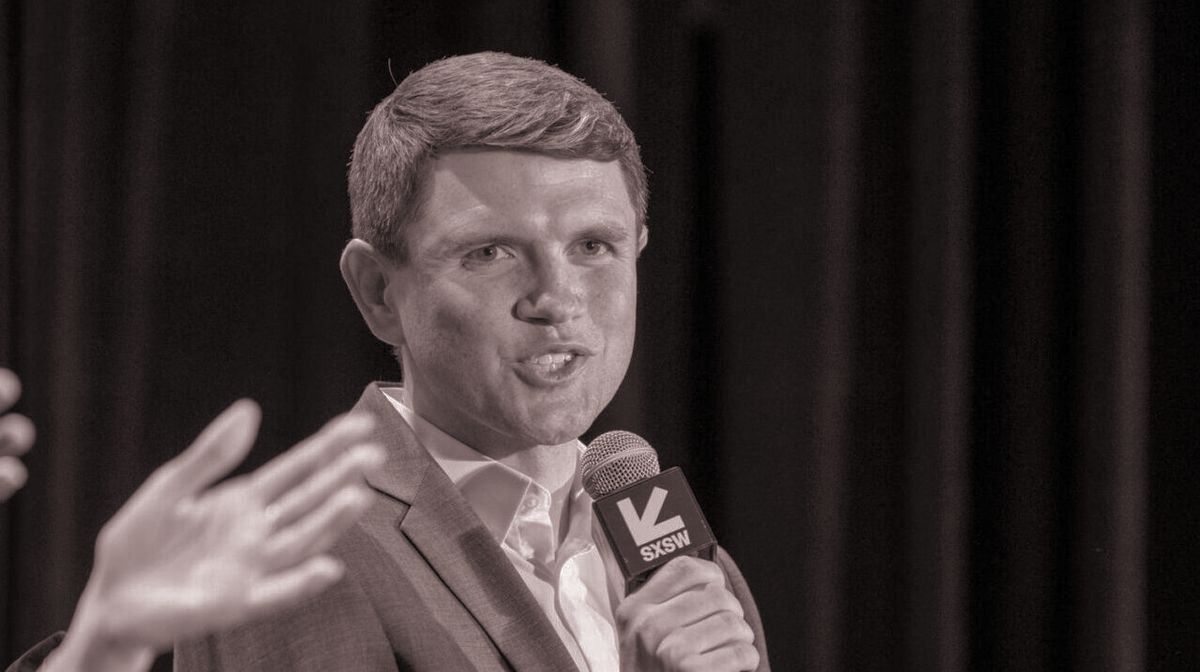
In today’s issue, my partner John Heilemann talks to Democrats Adam Pritzker and Daniel Squadron,
the co-founders of two organizations focused on state legislatures—one of the few bright spots for Dems—where the party is trying to build its base of support ahead of the midterms. (It’s also an arena that could suddenly become a lot more important nationally, given the redistricting chain reaction that Republicans just set off in Texas…)
|
|
|
A MESSAGE FROM OUR SPONSOR
|
|
|

|
Abby Livingston
|
|
- Schatz at glory:
Hawaii Sen. Brian Schatz has reportedly secured enough support from his colleagues to become the Democratic Senate whip, which means he will likely step into Dick Durbin’s spot as the party’s second-ranking senator after the midterms. Schatz also got an endorsement from Senate Minority Leader Chuck Schumer. If
you missed it, Leigh Ann interviewed Schatz back in June as part of our Puck Power Breakfast series. The senator, a basketball fanatic, described his ideal Senate leader as “sort of a passing point guard” who can maximize “the talents of each member of the caucus.”
He also noted that his time in the Senate has been different from his tenure in the
Hawaii legislature, where he and his colleagues “got all our bills done.” When he came to the Senate, he said he found that everyone there was “really, really impressive one by one, and then as a collective, not quite as impressive.”
- Brown’s next round?: Senate Democrats might be on the verge of another recruitment coup: Former Ohio Sen. Sherrod Brown is apparently interviewing potential campaign managers for a Senate run,
according to Axios. Sure, there’s a widespread belief that Ohio is basically out of reach for any statewide Democrat. But Brown is a unique figure in the state, where he outperformed Kamala Harris last year by 7.7 points and lost to Republican Bernie Moreno by less than four points. Plus, this time he would avoid the Trump turnout
machine. Republicans, meanwhile, feel good about Sen. Jon Husted, the incumbent by way of appointment, who is serving out J.D. Vance’s old Senate term until the November 2026 special election for the seat. (Currently, the Cook Political Report rates this seat as Likely Republican.)
A decision to run would likely make Schumer and D.S.C.C. chairwoman Kirsten Gillibrand the happiest people on Capitol Hill. Even considering a
grueling run for an abridged, two-year Senate term signals rising, much-needed enthusiasm within the party, much like Roy Cooper’s decision to run for Senate in North Carolina. The next happiest would be Ohio Democrats in the U.S. House, who are facing a court-ordered map redraw. Depending on what map emerges,
downballot Dems like Marcy Kaptur, Greg Landsman, and Emilia Sykes may need all the tailwinds they can get from a statewide candidate like Brown.
|
|
|
A pair of increasingly influential inside-game Dems are trying to cure what ails their party
by looking beyond the Beltway and way downballot—to the blue team’s signs of life in the nation’s state legislatures.
|
|
|
For all the trouble Donald Trump has been in lately, from the Jeffrey
Epstein brouhaha to economic numbers that suggest stagflation around the corner, little of it has accrued to the benefit of the Democratic Party, which remains deeply in the doldrums: chronically unpopular, still litigating whether Joe Biden or Kamala Harris is more to blame for what happened in November, engaged in factional squabbling about where the party needs to go from here, and in control of zero national power centers—not the White
House, the House, or the Senate in D.C., nor the majority of governorships around the country (with Republicans holding 27 and Democrats 23). When people say a party is in the wilderness, this is what it looks like.
But the other day, for my Impolitic podcast, I spoke to a pair of professional Democrats who were full of piss and vinegar—precisely because they see a path for their party out of the political hinterlands. The Dems in question were Adam Pritzker, an
entrepreneur and paid-up member of the donor class (who also happens to be a cousin of Illinois governor and presidential wannabe J.B. Pritzker), and Daniel Squadron, a former four-term New York state senator. Pritzker and Squadron are the co-founders of two organizations focused on one of few bright spots for Democrats in 2024: the nation’s state legislatures, where many of the party’s candidates outperformed those further up the ticket, snagging seats around
the country and breaking the Republican legislative supermajorities in North Carolina and Wisconsin.
|
|
|
A MESSAGE FROM OUR SPONSOR
|
|
|
Their first group, the States
Project, launched in 2017, played a big role in those victories, doling out $70 million on behalf of Dems in state legislative races, making it the biggest-spending outside group in that arena. The second is the States Forum, which kicked off last month and aims to create a network for germinating, cross-pollinating, and exporting state-level policy initiatives to the national level—and thus, in theory,
helping refurbish a political brand that Pritzker calls “toxic,” and turning the party into one that can, as Squadron puts it, “win over a supermajority of Americans.” Pritzker, Squadron, and I discussed all of that as well as a bunch of other meaty topics: from the role of progressive interest groups in defining their party, to the G.O.P.’s decades-long head start in grasping the importance of state legislatures, to the argument that Dems would be wise to look to the party’s deep bench of
governors for their 2028 standard-bearer. As always, the excerpt below has been condensed for space and edited for clarity. You can feast on the whole enchilada here.
|
John Heilemann: Guys, I’m sure you’ve been watching as
this young Democratic state legislator from Texas, James Talarico, has been all over cable news after he went on Joe Rogan’s podcast and Rogan told him he “needs to run for president.” So, Daniel, I ask you, as a former state legislator, what do you make of the James Talarico phenomenon?
Daniel Squadron: One, James
Talarico is a very, very talented public servant with a real sense of who he is and why he does this, and that’s a set of qualities that cuts across many levels of government. But a second thing is also true: James is really relevant to policymaking today, and that’s true of all of the 7,000-plus state lawmakers around the country. When you start getting to know them, you actually understand that there’s a huge amount of interesting, dynamic stuff happening in the state legislatures,
from the far left to the far right, with a whole lot of surprising realignment in the middle.
Adam, what do you think the attention Talarico is getting says about this moment in the Democratic Party—and whether, in a way, it validates what you and Daniel are doing with the States Project and States Forum?
Adam Pritzker: I think we’re in a time where national politics is almost detached from real life, and has completely lost the plot of what really matters
to Americans on a day-to-day basis. I think that’s why you see states outperform top-of-the-ticket Dems. When I met Daniel about seven years ago, I was interested in building an organization in the political space that focused on local politics. And Daniel, who’s been a state lawmaker, started talking about the power of state legislatures.
I wasn’t particularly educated on that topic—and I don’t think many people understand the impact that state legislatures have on people’s everyday
lives. When we started, we were looking at Virginia, and I said, Okay, we’re gonna have to build a budget. And he said, I think it’s gonna be about $300,000. It’s just unbelievable how much candidates raise at a national level, relative to how much state lawmakers raise—and make, by the way—relative to the importance of their role.
Tell me about your two organizations and the distinctions between them.
Pritzker: With the States Project,
the idea was to provide tools and resources to candidates and lawmakers to run for office, and then, once they won, help them govern. The role of the States Project is to let the ladder down and provide what would be a national campaign set of resources and tools to a state candidate. What we realized, once our candidates started winning, was that they started asking whether we had policy ideas. So we started the States Forum to catalyze some of those ideas. It’s a policy accelerator, and the
idea is to fast-track bold, state-tested ideas. We want to focus on what we think of as bedrock American values.
The frame, which we call the American Promise, is representative democracy, effective government, personal freedom, and fair markets. We think those are the first principles of America, enshrined in the Declaration of Independence. From there, it’s about what policy ideas—some down the middle, some further out on the edges—we can present that might fit within that frame. The
frame is really broad, because on one side, you have the abundance group, and on another side, you have an anti-monopoly group. We wanted to create the space to have those debates.
The States Project has become the biggest-spending Democratic outside group in state legislative races. Adam hails from the donor class and the world of money, but Daniel, you come from the worlds of politics and policy. I’m curious how you look at all this differently—and how
you two have combined your ways of thinking to push your two groups forward.
Squadron: It was so exciting to me that people might actually get involved in state legislatures. Adam and I had a couple of friends in common, and to my great shock, Adam, with his entrepreneurial experience, said, This seems like a great opportunity that other people aren’t seeing. He said, It’s fundamental that we’re not just partisan and that we have a set of ideas and values.
And I don’t think you can do this in legislature, so let’s do this together. But you have to resign your seat—which I did that August midterm, and we got started with the States Project.
Adam and I are continuing to think about those fundamental principles he mentioned earlier. When you bring it all together, we think that, based on a transparent set of principles, we’re starting to build something that counters the ideological and corporate-funded power of ALEC (the American
Legislative Exchange Council) and its State Policy Network—and their close sibling, the Heritage Foundation, which is at the center of that ecosystem.
|
“The Least
Popular Institution in America”
|
The G.O.P. has been all over the importance of state legislatures literally for decades—ALEC, which
you just mentioned, has been doing its thing since 1973! How is it that Republicans are so far ahead of Democrats on this front, and how big of an uphill climb does that present you guys?
Pritzker: Republicans have been focused on this for a very long time. Many of them have businesses that operate in states, and it’s in their best interest to have juice in the legislatures. One thing I think Republicans understood is that it’s not just the world of money. The bad news
for us is that they got started really early, and they understood that the business leaders who built massive organizations had to roll up their sleeves and build organizations alongside really talented political operatives to create a business-like supply chain of winning these legislatures, winning the House, creating policy, and providing the policy. They’ve got a lot of business people who are really interested in spending a lot of time building organizations for the right to enrich
themselves.
The good news for us is that what we want to do is not enrich ourselves, but improve people’s day-to-day lives. And how state legislators perform, relative to the top of the ticket, shows that people in states really do understand that their Democratic state lawmakers grasp the importance of getting more ambulances for their district, or providing meals to students at the beginning of class.
|
|
|
When the States Forum was launched, Adam gave a very spicy quote to the
Times: “We do think the [Democratic] brand is toxic and lacks a clear set of values and policy, products, and communication distribution capabilities.” Daniel, do you agree that the Democratic brand is toxic and lacks a clear set of values? And if so, what makes it so toxic?
Squadron: The Democratic Party is competing with Congress to be the least popular institution in America. So that’s toxic. If we’re being honest about a lot
of Democrats, they rarely talk about deep beliefs. That’s much more common on the other side. When we talk about brand, we should really be talking about deep principles. I actually think the Democratic Socialists of America and the far left do describe a worldview—it’s not a worldview I, or the majority of Americans, subscribe to, but I think it punches above its weight, because it is a worldview.
The only way to do the on-the-ground work of state politics is to answer what you
believe in. We really believe that all people are created equal; they have the right to life, liberty, and the pursuit of happiness; and the government secures those rights with the consent of the governed. It’s the same idea that Frederick Douglass, Abraham Lincoln, Martin Luther King, Barack Obama, and a whole lot of others have relied on to make our country even greater. And it clearly stands on representative democracy,
effective government, and fair markets. This is a true belief, which is the foundational starting point of a brand.
Okay, so you agree that the Democratic brand is toxic—but why is it toxic? What are the elements of the brand that make it so unpopular?
Squadron: When your political coalition is built up by a collection of single-issue goals, however admirable they may be, it’s very easy
to be caricatured by the most extreme version of each of those individual goals—whether that’s reproductive rights, civil rights, energy innovation, climate change, or criminal justice. The second piece of this is, there’s an ideological faction that’s developed over the last decade or so in the Democratic Party. It’s an ideology that’s not a majority ideology in this country. But because they actually have a set of ideas and theories that they’re willing to talk about, they become a proxy in
which everyone else is just like, That might be ideal, but I’m a pragmatist. But that’s wrong. The issue is, if you accept ideals that are fundamentally unpopular, then you look, appropriately, like an opportunist to voters, and someone who just wants to win.
The battle for the soul of the Democratic Party is typically cast as ideological: between progressives at the national level who get a lot of airtime and moderates/pragmatists operating more below the radar out in
the states. Do you see yourselves and the groups you’ve founded as being on one side of that battle, or as neutral arbiters?
Pritzker: I see us as being more neutral arbiters in that fight. One of the purposes of the States Forum was for those factions to air out some of their differences. There’s the anti-monopoly group who will say, One of the ways we can create fair markets is by cutting junk fees, and then there’s the abundance group, who’s like,
Actually, what we need is deregulation to build more housing supply. You’ve got someone like Ruy Teixeira saying, Americans need to be color-blind and not get lost in these kinds of identity politics conversations, you know. And another person who’s like, I’m a Latina woman and have family members and friends who are getting deported. How can I not think about my identity right now? So for us, it’s about how we can reconcile some of these battles and
synthesize some of these factions and ideas into a positive vision for the Democratic Party. We’re not saying everyone is ultimately going to agree, but we think that big tent really depends on being able to bring all of those people together under this vision of the “first” principles enshrined in the Declaration.
|
|
|
Join Emmy Award-winning journalist Peter Hamby, along with the team of expert journalists at Puck, as they let you in on the
conversations insiders are having across the four corners of power in America: Wall Street, Washington, Silicon Valley, and Hollywood. Presented in partnership with Audacy, new episodes publish daily, Monday through Friday.
|
|
|
Unique and privileged insight into the private conversations taking place inside boardrooms and corner offices up and down Wall
Street, relayed by best-selling author, journalist, and former M&A senior banker William D. Cohan.
|
|
|
Need help? Review our FAQ page or contact us for assistance. For brand partnerships, email ads@puck.news.
You received this email because you signed up to receive emails from Puck, or as part of your Puck account associated with . To stop receiving this newsletter and/or manage all your email preferences,
click here.
|
Puck is published by Heat Media LLC. 107 Greenwich St, New York, NY 10006
|
|
|
|







_01K1KRHY8S0BDC1N648KE942TA.png "T-Mobile For Business")