Hello and welcome back to The Best & The Brightest. I’m Leigh Ann
Caldwell.
I spent my day working on a few upcoming stories at the Capitol, where tensions are simmering on multiple fronts. Today, the Democrats’ intraparty issues erupted when Cory Booker of New Jersey took the extremely rare step of objecting publicly to a fellow Democrat on the Senate floor. After Catherine Cortez Masto of Nevada offered her bipartisan bills around policing, Booker jumped in to object on the grounds that the
Trump administration is withholding funds for law enforcement in states that don’t enforce the president’s immigration policies. A stunned Cortez Masto said she had never heard about Booker’s concerns.
The episode was emblematic of the divide in the party: Booker has repeatedly used floor tactics, with much fanfare, to draw attention to Trump’s norm- and rule-busting, and counts himself among those in the party who believe Democrats need to get tougher. “There’s a lot of
us in this caucus that want to fucking fight,” Booker told reporters. “And what’s bothering me right now is we don’t see enough fight in this caucus.”
I’ll have a lot more about the strain among Democrats, and lingering questions about Senate Minority Leader Chuck Schumer’s leadership, in my column tomorrow.
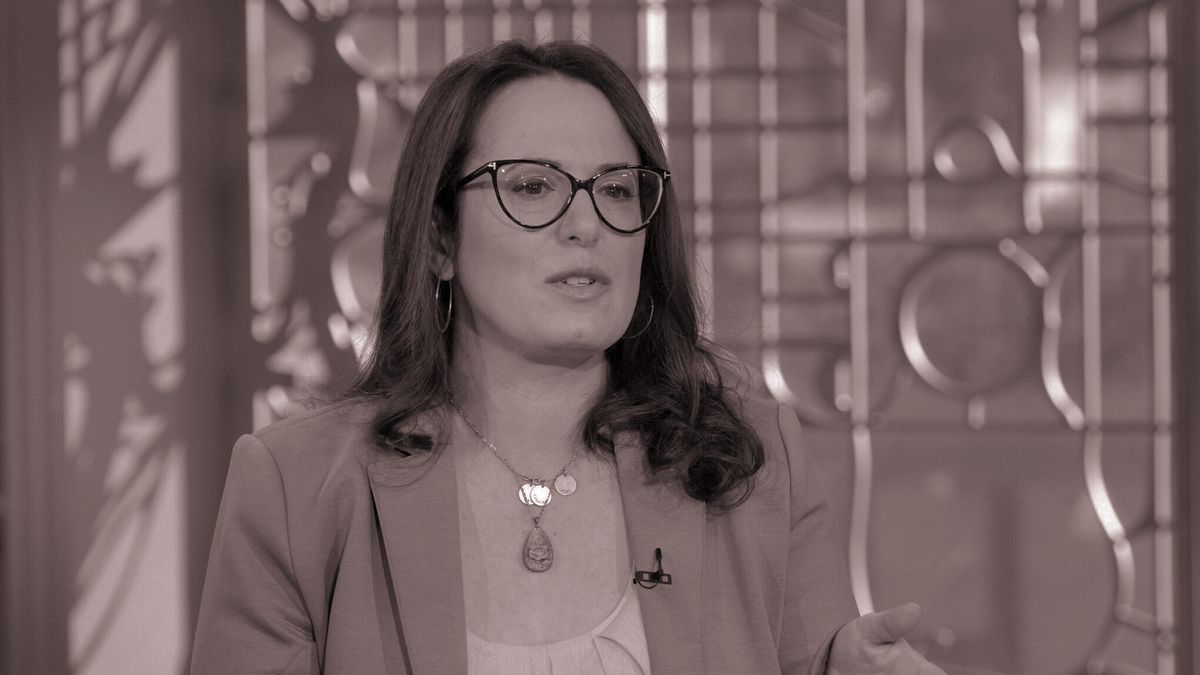
In tonight’s email, my colleague John Heilemann’s provocative conversation with New York Times resident Trumpologist Maggie
Haberman about the lingering Epstein scandal, the Pam Bondi side drama, and the challenges of covering a less leaky White House.
|
|
|
A MESSAGE FROM OUR SPONSOR
|
Imagine if health care was simple, coordinated, and designed to put your health first.
At UnitedHealth Group, we’re focused on comprehensive, proactive care that keeps people healthy over a lifetime.
More time with your doctor. Less time worrying.
Explore how UnitedHealth Group is streamlining care.
|
|
|
But first, here’s Abby on Texas and Michigan…
|
|
|

|
Abby Livingston
|
|
- Lone Star redistricting
ripples: The Texas political class is all aflutter as the state’s 38 House members wait to see how Republicans will redraw their congressional map, which Trump ordered in the hopes of engineering a five-seat pickup. So far, most of the speculation has been based on hypothetical computer renderings. The mapmaking traditionally has a lot of behind-the-scenes input from Republican federal reps, especially if a given member has strong ties within the state legislature. Then
again, the White House seems to have extraordinary control over this situation.
There are multiple potential scenarios that should scare nearly every Democratic member of the Texas delegation—save for Joaquin Castro and Al Green. But there are also Republican members, from the Austin, D.F.W., and Houston suburbs, who could find themselves having to actually work for their general reelections next year if too many G.O.P. voters are carved out of
their districts. Alternatively, an incumbent in a redrawn district could face too many new voters, and lose a primary to a state rep or county official whose constituency falls within the new borders. Members in both parties who see no path to reelection may just launch a statewide bid.
- Meanwhile, in Michigan…: The D.S.C.C. appears to have tipped its hand in the Michigan Democratic primary, with CNN
reporting that both Senate Minority Leader Chuck Schumer and D.S.C.C. chairwoman Kirsten Gillibrand are signaling support for House member Haley Stevens. She’s racked up more explicit endorsements, including from Nancy Pelosi, and had the strongest quarter in fundraising among the Democratic candidates, with $2.8
million raised. My sense is that the Michigan political establishment also sees Stevens as the obvious future Democratic senator from the state.
But this is a competitive primary, and it’s likely to be complicated. State Sen. Mallory McMorrow has a national following after her viral 2022 speech, and she raised $2.1 million last quarter—more money than Stevens did
over the same period, setting aside the $1.5 million that Stevens transferred over from her House campaign. Then there’s former Wayne County Health Director Abdul El-Sayed, who raised a credible $1.8 million.
Republicans, for their part, are hopeful about their chances in Michigan. While the G.O.P. deals with increasingly messy primaries in Texas and Georgia, Trump appears to have successfully cleared the Michigan field for Mike Rogers,
who narrowly lost last year to now-Senator Elissa Slotkin. But Slotkin faced only nominal Democratic primary competition, managed to position herself as a general-election candidate early, and avoided spending money on her primary. This primary is late—more than a year from now—which will give Democrats very little time for general election fundraising and primary wound-healing. There won’t be a more interesting Senate race this cycle than the Wolverine State’s—except maybe
Texas’s, of course.
|
|
|
And now, the main event...
|
|
|
A conversation with Times White House correspondent and presiding Trumpologist
Maggie Haberman about the acute political ailment afflicting the president—and why he’s finding it so difficult to shake.
|
|
|
We are now two days into the fourth straight week in which the Jeffrey Epstein imbroglio has
consumed Donald Trump’s Washington—enraging the president, engulfing his administration, inflaming MAGA Republicans in Congress, and emboldening Democrats from Capitol Hill to the Capital Grille. Any hopes Trump might have harbored that jetting 3,500 miles to Scotland for a golf-and-diplomacy getaway would grant him blessed respite from the Epstein story were dashed almost immediately on his arrival in Glasgow and repeatedly in the days that followed: by protesters brandishing
placards festooned with photos of Trump and Epstein together and captioned “Best Friends Forever,” and by reporters more interested in the president’s relationship with the convicted child sex offender and accused child sex trafficker than his trade deal with the European Union (shocking, I know).
To take stock of the Epstein metastasis and how far it might spread, I wrangled my pal Maggie Haberman to sit down for a chat for my Impolitic podcast. Though her title
at the Times is White House correspondent, Maggie is more accurately known as the paper’s most storied and deeply sourced Trumpologist; a relentlessly rigorous and scrupulous chronicler of our 45th and 47th president; and author of the number one bestseller Confidence Man (now out in paperback with fresh reporting through Election Day last year).
|
|
|
A MESSAGE FROM OUR SPONSOR
|
Imagine if health care was simple, coordinated, and designed to put your health first.
At UnitedHealth Group, we’re focused on comprehensive, proactive care that keeps people healthy over a lifetime.
More time with your doctor. Less time worrying.
Explore how UnitedHealth Group is streamlining care.
|
|
|
Maggie also happens to be the rare journalist whose revelations have, on more than one occasion, cut to the
core of who Trump is, causing him to lose his shit—which makes her analysis of his current verklempt-ness both unique and uniquely insightful. In our chat, we discussed why the Epstein story undermines Trump’s carefully cultivated image as an outsider, the potential limits of its long-term political costs, and how covering Trump 2.0 differs from covering Trump 1.0. As usual, the excerpts below have been condensed for space and edited for clarity; you can feast on the whole enchilada here.
|
John Heilemann: The title of your book, Confidence
Man, is, of course, a double entendre, alluding both to Trump’s massive confidence in himself and to the fact that he’s, well, a con man. And it strikes me as especially apt in the context of the Epstein story, which is a direct result of Trump having conned his base with a conspiracy theory and a misplaced sense of confidence on his part that it would never blow up in his face.
Maggie Haberman: One reason this
story is problematic for him is that he had very successfully, for a long time, positioned himself as a political outsider, as a person operating outside the system. During his trial in New York last year, for example, he really embraced the outlaw image. But the Epstein story cuts against that.
Because Epstein was, in a way, the ultimate insider—the people who consorted with him were all members of the political, financial, business, and even academic
elite.
Correct. The other problem for him is that he keeps calling this a hoax. It’s not just his own supporters, but many members of his own government, who pushed the conspiracy theories for years, ever since Epstein died [in 2019], about what was in the files. And it’s now sort of swallowed him, at least for the time being.
How big and how important is this story in Trumpworld? And is it fundamentally different from any other
story we’ve seen?
The way it’s the same as other stories that have been very distressing for Trump’s administrations is that he can have a very strong reaction to it, and people don’t want to discuss things with him. This is a topic that is visibly uncomfortable for a lot of officials. How much time he’s spending screaming about it depends on who you talk to—and I’m using “screaming” loosely. He is obviously very frustrated and angry, but in general, his administration
can’t seem to figure out how to move away from it. So Trump is doing what he often does, which is take matters into his own hands—in this case, by pushing to focus on the Russia investigation. That’s why you had Tulsi Gabbard at the briefing podium and so forth.
I’m not nearly the expert you are, but I can’t recall a prior instance in which Trump was so flagrantly at odds with his most ardent followers. We’re seeing MAGA influencers and key voices in MAGA media
calling bullshit, saying they feel betrayed by him—and he’s not giving an inch and instead is just trying, over and over, to change the subject. That strikes me as unprecedented. Am I wrong?
There have been moments where his base has made it clear they’re upset with something he has done, and generally Trump has moved away [from doing what the base hasn’t liked]. We are now seeing a consistent period where he’s doing things that his base doesn’t favor.
And we’re seeing it over and over again. But I don’t know what the cost is. If you look at his polling, some of his averages are clearly, steadily seeing some erosion, but not a massive dip. Putting aside President Trump, the Jeffrey Epstein story was a mainstream story about a sex trafficker for a long time. It’s unlike other stories that have generally operated at the fringe or been niche.
Another part of it is that Trump is term-limited. I think we’re seeing, in various ways,
people being more willing to be critical of him than I remember in a while—and certainly since he was indicted the first time, which was a very galvanizing event for the Republican Party. But what all of this means more broadly than just in this moment, I don’t think we know yet.
|
|
|
Much of what MAGA has been about is a sense of grievance among ordinary people, stoked endlessly by
Trump, who think that the elite regard them with disdain. So it was striking a couple weeks ago when Trump went on Truth Social and basically said, If you still care about this story—a story he and his allies promulgated for years!—you’re stupid. Which makes him sound like just another two-faced politician trying to gaslight them, like just another member of the elite, that is. And by doing that, I think he’s
really playing with fire.
His base and supporters are very bonded to him, and they still see him differently than a typical politician. So you’re correct that him attacking his supporters was a new flavor here. But again, I don’t know what this means. Politics in this country are binary. So when people get to the voting booth and they have a binary to choose next year in the midterms, the question is, does the Epstein thing factor in, in some
meaningful way, for voters who might otherwise have been inclined to vote for Republicans? Probably not.
|
Speaker Mike Johnson at first seemed to side with the MAGA members of his caucus demanding the
release of the Epstein files. Then, suddenly, he was back on-side with the White House, to the point of recessing the House ahead of schedule to avoid a vote on the matter. Does Johnson’s behavior suggest that although the Epstein story may be different, it hasn’t changed everything between Trump and Republicans on the Hill?
Yeah. Trump has shown a unique ability—involving some threats, and some fear that he won’t support them and will
cost them their seats—to keep people on his side. I think the Wall Street Journal story—about the birthday card to Epstein signed in Trump’s name—gave Republicans something to focus on, to defend against. Politics at this moment are defined by who you hate and who hates you back. You see that very clearly with Republicans on the Hill. But I do think Republicans realize this story is not going away.
Then The Wall Street Journal
broke the news, matched by you and Glenn Thrush in your paper, that Pam Bondi had informed Trump in May that his name is in the Epstein files. How significant do you think that is?
It’s notable that when Trump was asked by an ABC reporter in July whether the attorney general had briefed him that he was in the documents, he denied it and then pivoted to saying that Barack Obama and James Comey had confected things in the files. Trump has denied
any knowledge of Epstein’s criminality. He has maintained that he didn’t know what was happening. He has maintained that he, himself, did nothing wrong. And we haven’t seen evidence otherwise. The reason this is staying alive is because he keeps making a push in one direction or the other, and whatever he does forces some new attention on the case.
Putting aside the Epstein story: Trump 2.0 is clearly a different animal than Trump 1.0 in myriad ways. What’s different in terms of
covering it?
It’s objectively a less leaky White House. There are people within the West Wing that have instilled more of a sense that there will be consequences [for unauthorized disclosures]. Whereas, as I think Josh Dawsey put it about the first term, You’d have to have been deaf and blind to not have gotten stories back then. [Trump’s people] are clearly aware of the different stakes. In term one, there were a lot of
people who saw their jobs as stopping or muting him. But in this term, there are a lot more people who genuinely believe in him, who have been radicalized themselves by the experience of the last four years, and they want to see Trump succeed [on his own terms].
|
|
|
Join Emmy Award-winning journalist Peter Hamby, along with the team of expert journalists at Puck, as they let you in on the
conversations insiders are having across the four corners of power in America: Wall Street, Washington, Silicon Valley, and Hollywood. Presented in partnership with Audacy, new episodes publish daily, Monday through Friday.
|
|
|
Unique and privileged insight into the private conversations taking place inside boardrooms and corner offices up and down Wall
Street, relayed by best-selling author, journalist, and former M&A senior banker William D. Cohan.
|
|
|
Need help? Review our FAQ page or contact us for assistance. For brand partnerships, email ads@puck.news.
You received this email because you signed up to receive emails from Puck, or as part of your Puck account associated with . To stop receiving this newsletter and/or manage all your email preferences,
click here.
|
Puck is published by Heat Media LLC. 107 Greenwich St, New York, NY 10006
|
|
|
|