Hello and welcome to The Best & The Brightest. I’m Leigh Ann Caldwell.
I
am now one of the more than 19 million YouTube viewers who’ve tuned in to Jason and Travis Kelce’s New Heights podcast because of Taylor Swift. (That’s up somewhat from the roughly 700,000 viewers they got on their previous episode.) Meanwhile, Trump said during a phone interview on Fox & Friends this morning that one motivation for seeking a peace deal in Ukraine is that he wants to “get to heaven,” before
adding, “I hear I’m not doing well. I am really at the bottom of the totem pole.” (A Nobel Prize isn’t the motivation? Or maybe heaven is guaranteed for Nobel Peace Prize winners?) In the newsy interview, Trump also gave his “assurances” that any Ukraine security guarantee will not involve U.S. soldiers on the ground in Ukraine.
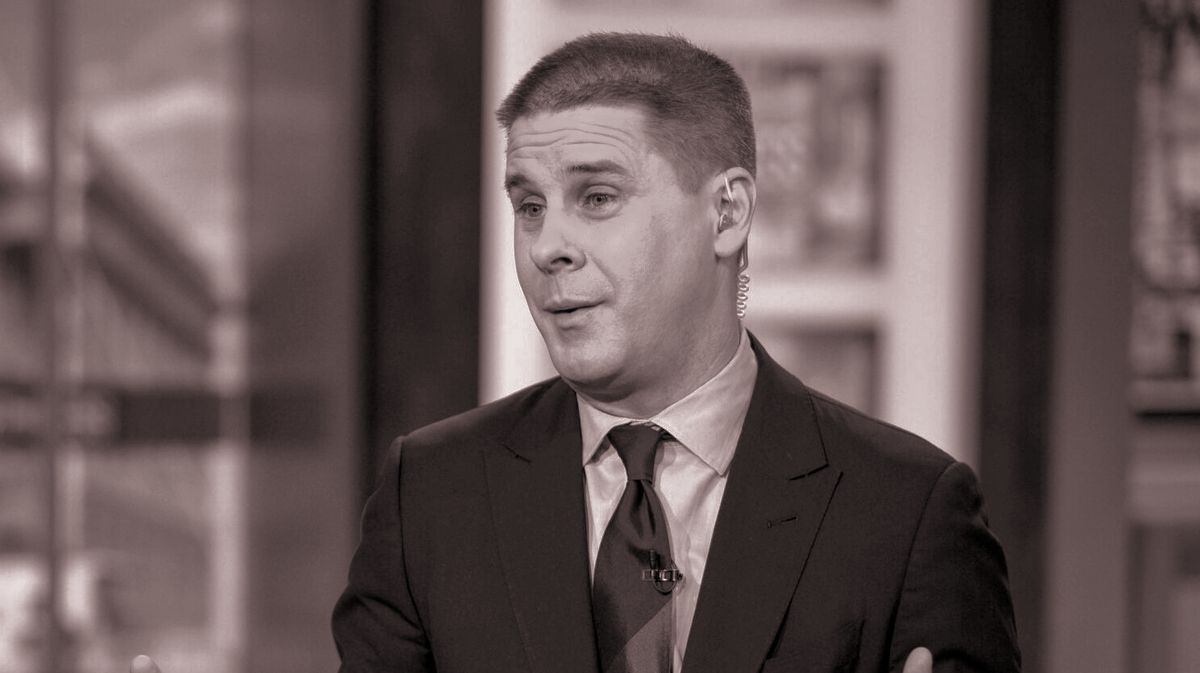
In today’s issue, my partner John Heilemann talks to former Obama comms master and current Pod Save America co-host
Dan Pfeiffer about the limits of Democratic messaging, the speed and scope of Trump’s authoritarian agenda, and Gavin Newsom’s all-in era.
But first…
|
|
|

|
Abby Livingston
|
|
- Talking takeover: While
many D.C. locals are outraged over Trump’s deployment of the National Guard and federal law enforcement in their hometown, lawmakers have largely been absent on August recess. That will change soon, as school and then Congress come back into session over the coming weeks, raising the potential for escalation both on the streets and on the Hill.
Specifically, members will be mired in frenzied negotiations to avoid a government shutdown at the end of the month. Meanwhile, on September 10,
the emergency 30-day authority that Trump invoked for his federal takeover under the Home Rule Act will expire. At that point, the onus will be on Congress; Tennessee Republican Rep. Andy Ogles has already offered a resolution to extend his power for “as long as it takes.”
Given Trump’s demonstrated dominance in the House, that extension seems likely to pass the chamber. (It’s worth noting, too, that some Democratic members have been victims of crime in D.C. themselves:
In 2023, Minnesota Rep. Angie Craig was attacked in her apartment elevator, and Texas Rep. Henry Cuellar was carjacked at gunpoint.) One might then expect the extension to be doomed in the
Senate, where passage would take 60 votes. Senate Minority Leader Chuck Schumer told Aaron Parnas last week that there was “no f***ing way” Democrats would vote to extend the president's power, and that they will fight it “tooth and nail.”
But some D.C. officials worry that unanimous Democratic “nays” aren’t a foregone conclusion here; some Democratic
senators are eager to look tough on crime, even if the alleged crime wave is largely nonexistent, and there may be enough of them to help Trump and Republicans reach cloture. A D.C. official pointed me to a 2023 Senate vote in which 25 current Democratic senators joined with Republicans to override a D.C. council update to the criminal code. Those
senators could be disinclined to push back against Trump’s takeover, too, and it would only take seven of them for Republicans to get to 60. Even so, the coarseness of Schumer’s language—along with the fury emanating out of D.C.’s neighboring state Democratic delegations—seems like early indicators that this may not be that divisive among
Dems. Regardless, I’ve heard that some of these senators’ staffers—many of whom live in the district—will soon be subjected to lobbying efforts to encourage their bosses to push back.
|
|
|
A timely conversation with Obama comms guru and Pod Save America co-host Dan
Pfeiffer about Gavin Newsom’s redistricting gambit, what Dems can learn from Zohran Mamdani, and the party’s broken messaging machine.
|
|
|
It wasn’t until Dan Pfeiffer and I sat down last Friday afternoon to tape the latest
installment of my Impolitic podcast that I realized we hadn’t had a good long gab since Donald Trump reoccupied the White House in January—an unusually long gap in a running conversation that’s been going on for, yeesh, nearly 20 years now. So Dan and I would have had a lot of ground to cover even if he hadn’t just conducted a fired-up interview with California Governor Gavin Newsom about his audacious gambit to outflank his opposite number in
Texas, Greg Abbott, in the battle over congressional redistricting that’s suddenly emerged as a defining, potentially chaos-unleashing conflict in the run-up to the 2026 midterms.
There are any number of reasons why my talks with Pfeiffer—inside the White House and on the campaign trail during his time as Barack Obama’s lead
communications strategist; on and off the mic in the years since then as he morphed into a progressive-media mainstay as a co-host of Pod Save America, author of three bestselling books, and proprietor of the must-read Substack, The Message Box—have continued unabated for lo these many years: He’s among the sharpest, savviest, most insightful, and (especially in the wake of the serial
assumption-busting, prediction-incinerating shocks to the system from the 2024 election) least smugly self-certain strategists in the business.
All those qualities were on display in our conversation for the pod, in which Dan assessed the degree of risk to Newsom’s presidential ambitions entailed in his call for a special election in November to approve his gerrymandering gambit; argued that the governor’s new “zero fucks” métier and undeniable (if sometimes cringey) capacity
to draw attention to himself are both considerable political assets in our present media environment; made the case for what he sees as the seminal dividing line in the Democratic Party in the Trump 2.0 era; and explained what Dems of all ideological stripes can learn from Zohran Mamdani and why the party’s messaging machine is so badly broken. As always, the excerpt below has been edited for clarity and condensed for space. But if you’re hungry for more, you can feast on the
whole enchilada here.
|
John Heilemann: Dan, we haven’t talked since Trump moved back into the
White House, so I’ll start with an observation about how different Trump 1.0 is from Trump 2.0. Back in 2017, the main question I would get from people when they recognized me in public was, Are we going to be okay? But now the question a lot of them ask is, Just how fucked are we? So, Dan, I put it to you: How fucked are we?
Dan Pfeiffer: I think we’re pretty fucked. Everything [that
makes me say that] is happening so much faster than people imagined, but it’s still happening slow enough that most people are missing the forest for the trees. No one would have believed you if you told them in August of 2024 that one year later there would be federal troops occupying D.C.; that masked ICE agents would be disappearing people to a torture prison in El Salvador; that major media companies would have felt the need to pay tribute to Trump to get their mergers passed; that Trump
would have fired the head of the B.L.S. and replaced her with someone who was at the Capitol on January 6; that the administration would be going to the museums to rewrite history to make it more favorable to Trump. And you could go on and on like that. You can debate how close we are to crossing the Rubicon into authoritarianism, but it’s so much closer than anyone truly thought possible. It’s pretty scary.
That brings us to Gavin Newsom and the redistricting wars. In your
interview with him about his gerrymandering play, he struck me as more than fired up—he seemed extremely raw and genuine in his anger about Trump. What were your top-line takeaways from your time with him?
Gavin Newsom is one of the very few Democratic politicians who understands how the base feels about this moment in time, and he is responding as such. He gets it. People think democracy is on the line. They think Trump is plowing over anyone and everyone, and
Newsom is stepping up. And I think Democrats are very much going to appreciate that. He’s putting a lot of skin in the game. He presumably wants to run for president. This isn’t a slam dunk on the November ballot in California—a state that has validated independent redistricting twice in its recent history. There is no other statewide initiative on the ballot. So you have to turn people out for seemingly esoteric redrawn congressional lines. And if he were to fail, I don’t know that that would
doom a presidential race, but it would be a huge blow.
What’s your view of Newsom as a political athlete and a 2028 contender?
To start with, he gets it, which is critically important, because I think one of the major dividing lines in the primary is going to be between people who understand the [nature and scale of the] threat Trump poses and those who dismiss the threat. The other thing—and this is what I’m watching every presidential
candidate for—is their ability to navigate the modern media environment. Can they get attention? Can they go everywhere, anywhere, and deliver a message? Can they hang out? Can they just seem real to people? And Newsom has demonstrated—not just in his job as a podcast host, but in his tour, going on podcasts like the Shawn Ryan Show—that he is everywhere all the time. And when you talk to random, sort-of-politically-engaged people, and ask them which Democrat they’ve seen most recently,
it’s almost always Gavin Newsom. He has demonstrated that he’s someone who can get attention in this media environment, and I think that’s hugely important in how we analyze the electability of candidates going forward.
The rap on Gavin has always been that he’s too nakedly ambitious, too calculating, etcetera. And the first interviews he did on his podcast with Charlie Kirk and Steve Bannon fed that impression. But now he seems to have shifted into a much more confrontational
posture.
He has reached his zero fucks era, and it’s very much to his benefit. I have talked to him in private a couple times over the course of the last several months and years—and he talks the way he’s talking now. The public and private personas of Newsom have merged in a lot of ways, and that’s good. I think he legitimately hates Trump with a passion of 1,000 suns. He thinks Trump is fucking up this country. He thinks he’s a true threat to everything we
stand for, and he’s not afraid to say it. It’s been to his benefit, because I think it’s authentic. A lot of politicians do performative rage, and Newsom’s rage feels, to me, quite real.
What do you think of how he’s played the redistricting move, and of the plan itself—politically and substantively?
They nailed the plan. I was quite impressed by what they pulled off behind the scenes. Newsom got the entire legislature, the entire congressional delegation, a lot of
stakeholders in California politics—which is, as you know, a fractious group—all on board with this plan. He navigated the issues around California’s long history with independent redistricting pretty well by making it temporary for these next three cycles, and then making it so when the next census comes, they can just go right back to where they were before. Newsom’s understanding of the map is that it will net five Democratic seats; almost as importantly, it will take four Democratic tossup
seats and make them safer, which will save the party $80 million to $100 million. So when Newsom says that California punches above its weight, that’s what he means.
|
J.B. Pritzker is the other big-name, big-state governor who’s adopted a fighter’s stance when it
comes to Trump. What do you think of him?
I like him a lot. He’s very good. He does the everyman thing very well for a billionaire. And he’s not a self-hating billionaire—he’s a little bit of the inverse of Trump, like the Democratic version of it. He was on one of the late-night shows and was asked about Democrats hating billionaires and he was like, Well, it’s not bad to be one, I’ll tell you that! He’s been less ubiquitous than Newsom, but I think he can hang in some
of the same places Newsom hangs.
It’s still hard for me to think that today’s Democratic Party is gonna pick a billionaire as its next nominee—the base of the party doesn’t much like plutocrats, as I’m sure you’ve noticed.
I’m bringing as much humility as I can muster to what Democratic primary voters are going to want, because I think 2028 is going to be unlike any Democratic primary in history. The stakes are going to feel higher than at any point in our history.
And our notions about what electability is have been thoroughly tossed aside by the events of the last eight years. If Republicans can nominate a thrice-married real estate developer from Manhattan to be their nominee three times in a row, then we can nominate anyone.
You’ve written admiringly in Message Box about Zohran Mamdani’s skills as a candidate and the primary campaign he ran for mayor of New York. What would you tell Democrats they could learn from
Zohran?
Authenticity above all else. Just be yourself, whatever that is. Maybe you’re super cool, or you’re a super nerd, or your passion is sports, or your passion is cooking. Another thing is, communicate all the time on every platform. Never stop. Mamdani was doing all these social media videos that were great, but he was also holding press conferences 24/7. If someone had a camera, he was talking to them. If you invited him on a podcast, he would do it. You
have to be omnipresent. One thing that was notable about his social strategy that every Democrat should learn from is that he never talked down to voters. The other thing is, he ran to win; he didn’t run not to lose. The vast majority of Democrats run not to lose, which is almost a guarantee you’re gonna lose.
How about James Talarico, this young Democratic state rep from Texas who killed it on Joe Rogan’s show, the clips went viral, and people started calling him the
future of the Democratic Party? Hyperbole aside, do you think he could be one of the faces of the party’s future?
I saw him give a speech that went viral at the Texas Democratic Convention a few years ago. And I reached out to him to tell him I thought his speech was very impressive. We’re operating on a limited sample size here, but what I’ve seen of him, I’ve been quite impressed by. He seems to know who he is, and he seems comfortable in his own skin. He was
great on Rogan; he’s been great as the lead spokesperson for the Texas House Democrats. The hard part is that he’s a Democrat in Texas. Beto [O’Rourke] is one of the most talented politicians and communicators in our party. And he’s someone who’s been unable to get to the next level because it’s very hard for a Democrat to win statewide. It hasn’t happened this century.
There’s an ongoing debate among Democrats about their messaging
between now and the midterms: Should they focus strictly on prices, affordability, and the economy, or hop on stuff like the Jeffrey Epstein scandal when those opportunities arise? What’s your view?
I don’t know if there are easy answers here. One problem is that the way we work as a party is we have this massive, incredibly well-funded, fine-tuned message testing machine that spits out the exact best words to say if we were able to grab a swing voter by the
lapels and they could hear no other words. That works really well if you’re in an environment where you can pay to put messages in front of people through linear and digital ads. But that media environment doesn’t exist anymore. So rather than thinking about what’s persuasive and then figuring out how we get people to hear it, we have to flip the equation: Start with what’s engaging—what are people paying attention to? What are the things we’ll say that actually will get people to
listen?
And I don’t think the right way for Democrats to think about any of this is, What are the issues to talk about? The way we should think about messaging is, What are the stories we want to tell, and then how do the issues that are out there ladder up to that story? We, as a party, don’t get to pick the issues because we have a bad megaphone, and Trump is president. So the story I think Democrats should tell is, Trump and the Republicans are part of the same broken
system that hasn’t helped you, and they’re using it to help themselves and their rich friends. You can fit Epstein under that rubric; you can fit the Big Beautiful Bill under there; you can fit DOGE under there; you can fit most of the things they’re doing. People haven’t reckoned with the fact that our party’s brand is in the absolute toilet. Credibility of messenger and efficacy of message are intrinsically tied. If the messenger has no credibility, saying the most “persuasive” thing is not
going to persuade anyone. And one of the ways we can rebuild our credibility is to seem like we are fighting.
|
|
|
Join Emmy Award-winning journalist Peter Hamby, along with the team of expert journalists at Puck, as they let you in on the
conversations insiders are having across the four corners of power in America: Wall Street, Washington, Silicon Valley, and Hollywood. Presented in partnership with Audacy, new episodes publish daily, Monday through Friday.
|
|
|
Unique and privileged insight into the private conversations taking place inside boardrooms and corner offices up and down Wall
Street, relayed by best-selling author, journalist, and former M&A senior banker William D. Cohan.
|
|
|
Need help? Review our FAQ page or contact us for assistance. For brand partnerships, email ads@puck.news.
You received this email because you signed up to receive emails from Puck, or as part of your Puck account associated with . To stop receiving this newsletter and/or manage all your email preferences,
click here.
|
Puck is published by Heat Media LLC. 107 Greenwich St, New York, NY 10006
|
|
|
|