Welcome back to The Best & The Brightest. I’m Peter Hamby, already burning a hole
in my just-arrived Johnny Blue Skies vinyl. Mutiny After Midnight is my album of the year so far.
Tonight, my deep dive on why Donald Trump is desperately grasping at “transgender” as a midterm election issue, and why Democrats still haven’t figured out a clean way to respond to his culture war baiting. But one progressive group has some data-driven advice on how Dems can talk about trans issues—if they’re willing to accept a few hard truths.
Mentioned in this
issue: James Talarico, Abigail Spanberger, Kamala Harris, Katy Padilla Stout, Tony Gonzales, Brandon Herrera, Mara Keisling, Charlotte Swasey, Ed Markey, Pramila Jayapal, and more…
|
|
|
|
For many families, navigating appointments, providers and costs can feel confusing and
unpredictable. UnitedHealth Group is working to make health care both easier to navigate and more affordable. By using the company’s digital tools, parents can find nearby providers and view expected costs before ever scheduling care. Having this clear information in one place empowers them to make confident decisions and often save hundreds of dollars each year.
Learn more.
|
|
|
|

|
Abby Livingston
|
|
Earlier today, Emily’s List endorsed Katy Padilla Stout, a somewhat obscure
Democratic nominee in the messy race to succeed Texas Rep. Tony Gonzales, who dropped his reelection bid amid an unfathomably ugly scandal involving the death of an alleged former mistress who’d served on his staff. Padilla Stout will face Republican Brandon Herrera, a YouTuber who’s been referred to as a “goose-stepping extremist” and has perhaps the most incendiary social media output of anyone who’s gotten this close to serving in Congress.
The nod signals credibility to donors and other Democrats, but more than anything, it’s another reminder that Democrats are feeling emboldened in places they wouldn’t have dreamed about this time last year—Gonzales won his southwestern district by 25 points last cycle. That’s still a daunting
statistic for Democrats, but they clearly hope to capitalize on all the political chaos in Texas. After all, every cycle brings an accidental member of Congress or two.
|
|
|
|
Republicans are gleefully seizing on James Talarico’s “six sexes” comments while Trump warns
darkly that Democrats want “transgender for everybody.” New polling suggests how the party can defuse the G.O.P.’s “they/them” playbook before it trips them up again in November.
|
|
|
|
Donald Trump has been saying the word “transgender” a lot lately. He says it with Seussian
repetition in the White House, at rallies, on Air Force One with reporters: Trans people? Trump doesn’t like them here, there, or anywhere. Trump is pushing the vague threat of “transgender” so hard in the midterms that he tried (and failed) this week to add an amendment banning transgender athletes from playing in women’s sports to the SAVE America Act, a bill about elections. Democrats, he promises, want “transgender for everybody.”
In Memphis on Monday, Trump declared that Democrats
support “transgender mutilization of our children, which is a 99-1 [issue].” Mutilization is not a word. But the second part of Trump’s take was at least directionally accurate. In campaigns and polling, trans and gender-related topics are generally a winner for Republicans and a loser for Democrats. The Trump campaign’s infamous “they/them” attack ad against Kamala Harris in 2024 is the obvious case study. As for the data: Pew found last year that 66 percent of
Americans support requiring trans athletes to compete on teams that match their sex assigned at birth, and a majority supported banning gender transitions for minors.
So Trump has ranted in generic terms for months about Democrats and their supposed transgender agenda. Last weekend, however, he turned his Truth Social bazooka on a single candidate: James Talarico, the recently minted Democratic Senate nominee in Texas. “He’s got six Genders, insults to
Jesus, only vegan food, was wearing a mask in 2023 and 2024, and is a weak, ineffective guy who we ‘allowed’ to win prior to releasing the avalanche of information we had on him because, as bad as [Jasmine] Crockett was as a Candidate, this guy is worse!” Trump wrote.
Trump was calling attention to a bonanza of videos released on social media in the wake of Talarico’s primary win—harvested and hoarded by researchers at the Republican National
Committee—showing Talarico libbing out on a range of cultural issues, sounding less like a Texas seminarian and more like a Bushwick-dwelling Oberlin grad in 2019 addicted to performative Instagram posts about white fragility. A sample of the oppo: Talarico saying in 2020 that “white skin” spreads “the virus of racism”; or posting in 2021 that “radicalized white men are the greatest domestic terrorist threat in our country”; or, while wearing a Covid mask in 2022, bragging that he was running a
vegan-only “non-meat campaign” to respect animals and fight climate change.
Indeed, Republicans have been positively giddy about the candidate, who has talked about gender in ways that seem lab-designed to turn off the median Texas voter. There was Talarico saying in a Texas House committee hearing that “there are more than two biological sexes—in fact, there are six.” Or Talarico saying that “God is nonbinary.” And a past interview in which Talarico was asked to name “something that you
love that’s not family or friends.” He could have said anything. A Bible passage. College football. The huevos rancheros over at Cisco’s. His answer, after a pause? A group of trans children who had recently visited the Texas state capitol to demonstrate against G.O.P. legislation.
|
|
|
|
Health care can feel stressful and complicated – especially when patients lack clear
information about their care or what it will cost. This uncertainty can create barriers to getting the right treatment. By offering intuitive digital tools with upfront information, UnitedHealth Group is making health care easier to navigate. This empowers patients to make confident decisions, often helping them save hundreds of dollars each year.
Learn more.
|
|
|
|
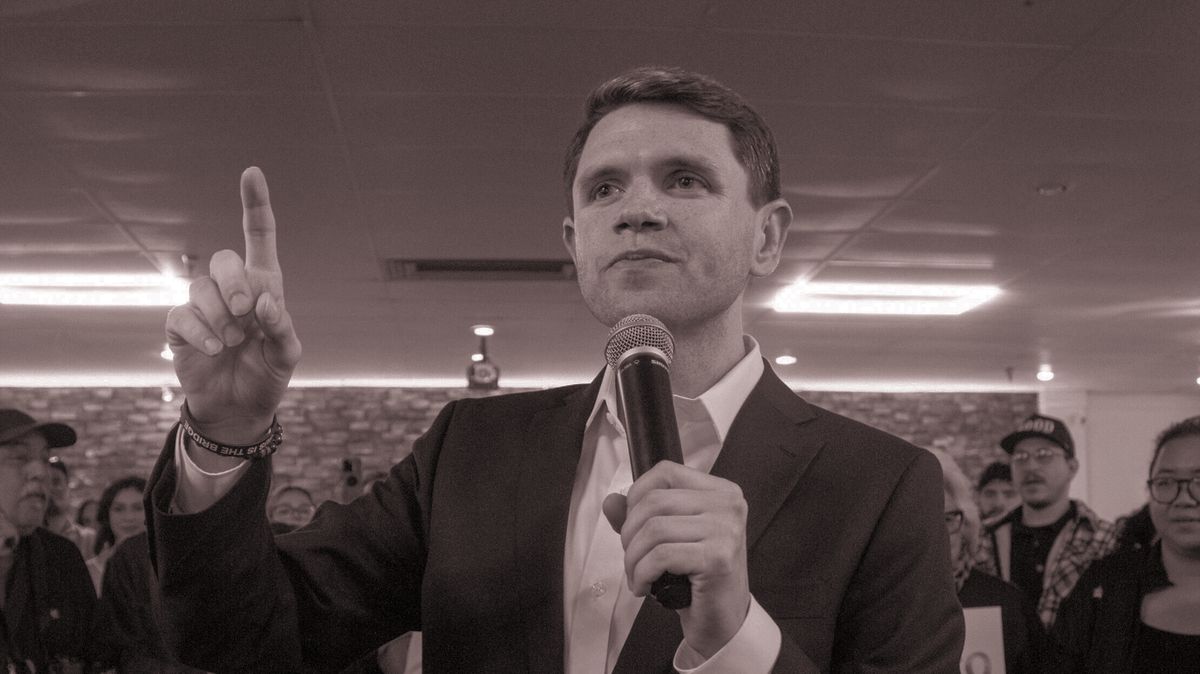
In the confines of his blue-leaning state House district, and his Love Thy Neighbor presbyterian worldview,
Talarico was only saying what he believes. But his takes on gender politics are a much harder sell in a statewide election—especially in Texas, which hasn’t elevated a Democrat to statewide office since 1994. Talarico, of course, can still win in November, especially if the election hinges on Trump’s unpopularity, the high cost of living, and foreign wars. It’s the rare voter who is casting a ballot on trans issues alone, and concerns about affordability and the economy remain the top issues in
every poll. But even Talarico seems to know that his voluble remarks about trans youth and God’s gender express opinions that are not widely shared, and certainly not helpful in a general election. After his primary win, Talarico defended his values, but conceded to the Times regarding his past comments on gender and race, “I probably would have said them differently.”
|
The Searchlight Institute, a Democratic think tank created after 2024 to yank Democrats back to the normie
center, is trying to help candidates like Talarico figure out how to talk about trans rights in a way that doesn’t play into Republican hands. But plenty of Democrats would rather not talk about trans people at all, hoping their concerns just magically vanish from the discourse. This head-in-the-sand approach might explain why a massive Searchlight research project on trans issues, and how Democrats can seize the upper hand in the debate, went largely unnoticed when it was released last
week.
The memo, authored by longtime trans rights activist Mara Keisling, included a year’s worth of high-quality survey data on how American voters view trans people—and importantly, trans youth. Keisling, a senior fellow at Searchlight, called for a full “reset” of how the left approaches trans advocacy
and policy-making. “This means shifting our primary focus to education—while continuing to try to enshrine core civil rights protections into statute,” Keisling wrote.
In the report, Keisling and Democratic pollster Charlotte Swasey delivered a bracing two-part verdict on how Democrats should approach trans issues. First, the optimistic takeaway: Democrats should double down on defending human rights for trans people—in the workplace, in public spaces, in
their efforts to access housing and credit—and stand up against bullying and discrimination from Republicans who want to take their rights away. “If the Democrats stop fighting for human rights, they are pretty much done, particularly now that the president and his Republican Party are so anti-human rights in almost every context,” Keisling told me. But, she added, “that doesn’t mean they should be talking about trans rights all the time.”
This is where the second, less hopeful part of
the Searchlight report comes in, and the conclusion might be a difficult pill to swallow for Democrats and activists who have spent years defending trans youth against Republican rhetoric. Yes, Americans oppose discrimination against trans adults. But exceptions for minors are a different story. “Americans hold conservative attitudes where certain policies related to gender identity and transgender rights are concerned,” Keisling wrote. “Voters are especially focused on kids—from the bathrooms
they use to the sports teams they may join, and access to hormone treatments and other forms of healthcare.”
In Searchlight’s polling, conducted in multiple rounds going back to early 2025, the dividing line on age was stark. In general, 69 percent of respondents said businesses and landlords should be required to treat trans people equally. Another 70 percent said trans people should be able to live their lives free from discrimination and bullying. And 64 percent said ensuring the
safety of trans children is very important to them. “The affirmative message is that Democrats should lean into the fact that Americans are not interested in cruelty,” Swasey told me. “The most toxic parts of the G.O.P. message are when they are needlessly cruel or trying to restrict how adults can act.”
But when voters were pressed on trans rights for people under the age of 18, Americans were overwhelmingly resistant. “This is some of the most stable polling we have seen over time,”
Swasey told me. “People strongly believe in parental rights, parental control, or the idea that children are not mature enough to make these sorts of choices and medical decisions. Democrats have to stress that parents should be involved in their children’s decisions.”
Among Searchlight’s findings: 70 percent of voters believe parents should have access to everything happening to their children at school, and 56 percent believe schools should inform parents if a child questions their
gender identity. Another 74 percent believe gender transition surgeries should not be available to anyone under the age of 18. And 58 percent support policies requiring trans athletes to compete on teams matching their birth sex. Swasey told me that sports emerged as the biggest dividing line in all of their poll questions. “Fundamentally, people are concerned about safety and fairness,” Swasey told me. “I think voters look at it as kind of a sensibility test. A common sense test for Democrats.
We have to acknowledge it and move on, while stressing that we aren’t interested in being cruel to children.”
Keisling, who has spent decades in the activist trenches, put it another way: “Politics isn’t about being reasonable anymore. It’s about gut feel.” She said youth sports is essentially a lost cause for the left. “Still fighting about sports isn’t getting us anywhere,” she told me. “It’s going to be a long time for us to win on the subject of sports.” She punctuated this in the
Searchlight report, writing that “sports participation is simply not a winning issue right now—even among left-leaning voters. … The terrain is not what we wish it was, but by acknowledging that reality head-on, we can make a plan to shift views and do the hard work of building a new consensus around policy priorities.”
|
When I asked why Searchlight felt compelled to go into the field with these poll questions multiple times—in
2025, and again last month—Swasey pointed to Abigail Spanberger’s victory in the Virginia governor’s race last year. “Coming out of 2025, there was a view in the political space that Spanberger had defused the issue. That was the perception among Democrats—that she was attacked by Republicans on trans issues, but she won anyway—so it’s fine,” she told me. “That’s not how it works, but we wanted to re-run the key questions anyway and see if voters had radically changed their
opinions. They had not.”
|
|
|
|
Last year, I
wrote about Spanberger taking heat on the subject of youth sports and trans access to bathrooms—and how she, unlike Kamala Harris a year earlier, was finally able to pivot away from the complicated subject and back to the safer ground of talking about rising prices and Trump’s economic failures. Spanberger was mostly coasting to victory in
Virginia, despite being harangued by a hapless G.O.P. opponent who ran a watered-down “they/them” attack ad against her that fell flat.
Spanberger was also being chased around Northern Virginia by a right-leaning local news reporter, who kept shouting questions at her about a transgender sex offender who had entered a girls locker room in Fairfax County. This is where Spanberger stumbled—at first. She gave a meandering 90-second nonanswer about court cases and Title IX and the importance
of public education and Trump’s threats against Virginia. The blundering clip went viral in Virginia political circles and demonstrated that Democrats, a year after the Harris loss, were still uncomfortable and defensive when facing questions about trans people. But after her rare misstep, Spanberger huddled with her team and located a friendlier reporter who would hear her real opinions on trans youth.
In Roanoke, Spanberger said she believed in the rights of trans people, but
also acknowledged concerns about fairness and safety, and said decisions about youth sports should be left to local leagues and jurisdictions. “I recognize the concern that families and community members might have about the safety of their own kids, about competitiveness, about fairness,” she said, before pivoting right back to her comfort zone: education and fixing the high cost of living. That answer, in hindsight, passed the “common sense test” with voters that Searchlight described in its
report.
Talarico, since his primary win in Texas, has also done an able job of changing the subject when asked about his trans comments—even if he might be haunted by on-camera evidence in a way Spanberger was not. “The only thing the media wants to ask me about are trans athletes,” he said in a recent MSNOW interview. “What I would say is that the only minority destroying this country is the billionaires. … Trans people aren’t taking away our healthcare. Undocumented people aren’t
defunding our schools. It’s the billionaires and their puppet politicians. And so we need not only the media, but all of us, to focus on the real problem at hand.”
When Democrats and activists talk about trans rights, Keisling told me, they need to do so in “clear and accessible terms” instead of relying on “jargon” and “purity tests” that can be easily distorted by Trump and his allies. She pointed to a “Trans Bill of Rights” introduced in Congress last month by two progressives,
Massachusetts Sen. Ed Markey and Washington Rep. Pramila Jayapal, that stands no chance of becoming law in the current administration. “I’m sure that bill lands with the electorate in Massachusetts, but I can already see how Republicans will paint it any way they want,” Keisling told me. “And you’ll have Democrats from moderate districts struggling to vote for it and justify it. We need to get back to basics, back to educating
the people around us. There has been too much trans storytelling aimed at trans people. But there hasn’t been a lot of trans storytelling aimed at regular people.”
|
|
|
|
Join Puck’s chief political columnist, John Heilemann, as he roams the corridors of power and influence in America on this
twice-weekly interview show, taking you beyond the headlines with the people who shape our culture: icons and up-and-comers, incumbents and insurgents, moguls and machers in the overlapping worlds of politics, entertainment, tech, business, sports, media, and beyond. The conversations are rich and revealing, unrehearsed and unexpected… and reliably impolitic. A Puck-Audacy joint, new episodes drop every Wednesday and Friday.
|
|
|
|
Need help? Review our
FAQ page or contact us for assistance. For brand partnerships, email ads@puck.news.
You received this email because you signed up to receive emails from Puck, or as part of your Puck account associated with . To stop receiving this newsletter and/or manage all your email preferences, click here.
|
Puck is published by Heat Media LLC. 107 Greenwich St., New York, NY 10006
|
|
|
|
|